Featured Post, or Blast from the Past

And Father's Day Is STILL a Good Time to Buy a Book

Because Dad (and Gramps and Poppa) deserve the thought that counts    

Showing posts with label Daniel Pinkwater. Show all posts

16 November 2013

You Don't Have to Wait Until Thanksgiving to Be Thankful


Had "Thanksgiving" today at our niece's home, taking advantage of the fact that Larry's sister flew in for a visit along with her two sons and their sweethearts.  Just like on the traditional fourth Thursday of November, we had a lot of people, a lot of food and some good talking.

That somehow makes having Thanksgiving books for sale not so early.  In fact, it seems like Thanksgiving is just around the corner, although it is one of the latest dates it can be.  I would have to count my fingers and toes to verify whether it's the very latest it can be, but I think that it is this year, 28 November.

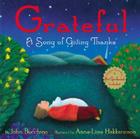
And, we have a lot of great books to keep the children (and their reader helpers) occupied, entertained but still aware of just what we are all doing and why.  And, for all of us, there's Grateful: A Song of Giving Thanks which includes a CD with Art Garfunkel singing.


Thanksgiving is my favorite holiday and a truly American holiday (yeah, yeah, we'll just ignore the fact that Canada and maybe even Burundi has a Thanksgiving, also).  It is not religious nor exclusively honoring one group or even one person.  And, almost everyone has the day off (except those unfortunate worker bees who must open the stores at midnight on Black Friday or even on Thanksgiving Thursday), so that they can really think about for what they could be thankful.  I know I will be.  

Happy Thanksgiving, All.

03 December 2011

Stories Most Fowl


When This American Life on Chicago's WBEZ (NPR) played a show containing segments or "acts" about an entire family who for years around Thanksgiving time tiptoed around a hand puppet duck by calling the main attraction at the holiday meal a "fish," and a turkey farm in which a girl, her sister and her father spent frantic minutes trying to save the family's livelihood from drowning themselves by raising their heads and opening their mouths to swallow the deluge of rain pouring down, I bet no one realized that some fourteen or fifteen years later, they would still be finding -- probably with little difficulty -- poultry stories to tell.  This year, as I listened to "Poultry Slam 2011" on the way from Chicago to Dixon (while everyone in a 40-mile radius of Downtown Dixon was enjoying its Christmas Walk), I could picture items we have sold at Books on First which made perfect complements to the acts.

For Act One, "Witness for the Barbecue-tion," I thought about Melissa & Doug's Tic-Tac-Toe game, wonderful for children, adults and chickens.  Sure, a tree was killed, but unlike paper, the game is re-usable and it sure beats having to find a pen or pencil.  Besides, I have never seen a chicken hold a pencil properly.
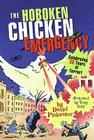
For Act Two, about a wild turkey terrorizing a Martha Vineyard neighborhood, I thought of all kinds of books, but the one that stuck is not about a turkey, but about a giant chicken.  A science experiment gone a little wild, Henrietta was just trying to play with the neighborhood kids, just like Tom Turkey who looked so cute playing hide-n-seek with the deliveryman who was scared "sh-tless" of the giant fowl.  Daniel Pinkwater's The Hoboken Chicken Emergency is a 33-year old classic.

I have to say, though, I don't understand the average person's skepticism about terrorizing turkeys.  What makes them so lovable that it's impossible to imagine them to be mean or nasty?  I was terrorized by one of our male turkeys who kept me from exiting my car after I arrived home from Chicago, jumped on my thigh and made me stave it off with a long walking staff that someone had made and presented to Larry.  Once, the cleaning lady called Larry from her car and apologized for not being able to go into the house to work, because the tom wouldn't let her out of her car.  Larry would not believe me until he saw the tom jump me.  When he came to scold the turkey, the tom started chasing him.  Even then, Larry hated to part with the turkey.  Normally, when a rooster attacked someone, especially a child, it went into the pot immediately for stock.  Our tom was way too old and big for that noble end; it was eventually given away to someone who either thought he could handle this turkey or did not believe it could be a bully.

For Act Three, "Latin Liver," about a natural way to raise geese with enormous livers for producing foie gras, I naturally thought of Mark Caro's The Foie Gras Wars, which begs the question: why are animal rights activist so focused on a slightly greater than 0% minority in the abused food animal world when there are so many other food animals being inhumanely bred, raised and slaughtered -- like those hogs in the confine just a mile from where we live.  Producers in Caro's book contend that the process of gavage, or force feeding, geese to grow their livers to massive proportions might look abusive, but really, the geese don't mind.

And then, there are the sharks who are left to fend for themselves after their fins are cut off for shark fin soup.  I love a well-made Chinese shark fin soup, but those horror stories of wildlife abuse have certainly led to a dearth of that offering in restaurants and at banquets.  I love liver made right, too.  In Paris, we bought a couple of jars of duck liver from a woman who had her own duck farm and sold the resulting foodstuffs out of a windowless little shop on the Ile de la citè.  It was fantastic (and probably not healthy for my liver), so I might imagine how heavenly true foie gras would be.
17 October 2011

Food Glorious Food

I have discovered that today is Blog Action Day on which bloggers throughout the world write about a topic of global concern.  This year's topic is "Food."  Well, that narrows the range.  Or does it?

Along with air to breathe and some temperature control to keep a human body from freezing or melting down, food is a vital part of our existence.  It also has a wide-ranging definition.  Yesterday, I was eating brunch with an especially intelligent and sophisticated group of people -- Vassarites, and we discussed restaurants, good meals, and at one point, molecular gastronomy.  A trained cook among us gave an example of molecular gastronomy at work -- the breakdown of an apple to its core (pun intended?) elements -- fiber and flavour.  So, can we take those elements and present them to the diner differently, like as a piece of paper made of apply fiber which tastes (one expects) like apple?  This might come in the form of an edible menu.  The objection one person made which is the objection most of us have is, why not enjoy the fruits (another pun?) of Nature's labor and eat an apple in its pure form?  Another person articulated the objection more forcefully:  it is akin to playing with our food; with all the starving people in the world, we are expending exorbitant amounts of resources to play with food.

There may be an argument that molecular gastronomy makes eating out more of an experience, an adventure, and not merely in the 21st century to socialize.  This would then be like the adoption of cooking meat 1.5 million years ago which enabled hominids not simply to stay alive, but to thrive (as demonstrated in Robin Brande's Fat Cat, a young adult story which uses the question, "What would happen if we eat like hominids did?" as the beginning basis for a science fair project).

This would be the antithesis of what a farmer once called, "Better living through chemicals."  High yields of grains and other crops through use of fertilizers, weedkillers and insecticides, refrigeration, preservatives and don't forget, refined fuels for the production, transport and cooking of food are all progress and have undeniably made life better for a significant amount of people in the world.

Because we in the Western World can take food for granted, we can take it further.  We can have a reaction to the inefficient packaging of regularly fried potato chips by creating pre-formed, orderly stacked chips made from potatoes (we could have had that for fish, too, if we listened to Professor Mazzocchi of Hoboken), and we can have a counter-reaction to that over-processing by eating only organic potatoes freshly fried in fresh pressed peanut oil.  We can have an evolved sub-species of humans called "foodies," who are basically food snobs, continuously looking for the next trend.  The foodies are eating locally grown organic purple potatoes freshly fried in duck fat, unless they are enthusiasts of molecular gastronomy, admiring and inhaling the essence of the slice of potato frozen with liquid nitrogen and then, transformed into vapor.  One wonders what kind of science fair project can come studying the eating habits 21st Century Homo Sapiens Americanus.