The debate goes on regarding whether American English as a living language can go unfettered on its way (into a downward spiral or forward in onward progress, depending upon one's point of view). Astonishingly to this writer is how prevalent such debate has been in recent days.
To my knowledge, NPR alone has recently had two major items on words, today's on the usage of "literally" on Weekend Edtion Sunday (which featured snippets of interview with NPR journalists -- too bad they didn't call Scott Simon on his "literally struck terror in my heart"), which continues the wonderment of how "literally" morphed from being "real" versus a figure of speech to being a figure of speech itself, meaning "I mean, really, really, no-kidding, you-had-to-have-seen it [place gerund here]."
The other NPR item more aptly addresses use of language today. On one hand, we Americans (not knowing of anyone else, I can only speak of us and that's already pretty dangerous) are sloppy with language, cutting sentences short and challenging the basic subject-verb-object structure, creating new words and new definitions of old ones and forgetting and thus losing hundreds daily (as witnessed by a now unreachable, possibly defunct website www.savethewords.org). On the other hand, many of us (now, this does not really include yours truly) are incredible wordsmiths. These highly competent manipulators of words and language influence our thought, sway our decisions and shape our worldview. Unless another master manipulator points the fact out, we, more likely than not, fail to appreciate what is happening to us. On today's NPR Morning Edition, there was an interesting story called "Loaded Words," about "gun control" vs "gun violence prevention." How each of us views the issue is how we frame the issue.
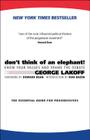
In the piece, George Lakoff contributed a word or two. I believe his books would be read if they weren't politically oriented towards Democrats. I think he was simply getting too frustrated about how we all are so influenced by the well-spoken Conservatives. They sound so reasonable, don't they, especially when they speak on NPR. Liberals tend to sound shrill or whiney. Lakoff has basically been saying, "Wake up, people! Know what words are being wrapped around you like a magic spell!" No, not like a magic spell. Words ARE magic.
Sauk Valley's premier bookstore/coffeehouse features fiction, non-fiction, children's & local interest books.
Open 7 days/week, we also have fine coffees & pastries, wooden puzzles, children's art supplies & other toys, handmade fair trade goods plus priceless conversation. Special orders welcomed.
Featured Post, or Blast from the Past
And Father's Day Is STILL a Good Time to Buy a Book
Because Dad (and Gramps and Poppa) deserve the thought that counts
Showing posts with label language. Show all posts
10 March 2013
18 March 2012
The Agile Brain Leaps Among the Evocative Words
In a recent New York Times piece, Annie Murphy Paul, author of Origins: How the Nine Months Before Birth Shape the Rest of Our Lives, writes of a wonderful confirmation of why people should read, but not (in my mind) only fiction, but also, poetry or true crime or history - anything by a good wordsmith. Brains crave stimulation, and now we can see what readers have always intuitively known, that hearing words like, "lavender" and "coffee" is almost as good as smelling the real thing, that reading "velvety voice" or "leathery hands" is almost as good as hearing or seeing and reading "kick" and "leap" on a page is about as good as watching the action and maybe even thinking about doing such activities.
Verbal and written language are important. Words -- the building blocks of a vast communications network -- are important. Descriptive words, the stuff of poetry, fiction and more, allow us readers to experience something more than the moment, whether the evocation of a memory, empathy with the narrator, entertainment alongside or at the expense of the characters, enlightenment, escape, and more (whether it starts with an "e" or not). In a piece in the same NY Times section this weekend, Jhumpa Lahiri, author of such best-selling titles as The Namesake (a 2011 World Book Night choice) and Interpreter of Maladies, shares how certain written language had affected her and continue to transport her far from the present moment.
Thank you for such exquisite insight on writing, also, Miss Lahiri. I love the imagery in your description of not being able to leave well (or not) enough alone;
Verbal and written language are important. Words -- the building blocks of a vast communications network -- are important. Descriptive words, the stuff of poetry, fiction and more, allow us readers to experience something more than the moment, whether the evocation of a memory, empathy with the narrator, entertainment alongside or at the expense of the characters, enlightenment, escape, and more (whether it starts with an "e" or not). In a piece in the same NY Times section this weekend, Jhumpa Lahiri, author of such best-selling titles as The Namesake (a 2011 World Book Night choice) and Interpreter of Maladies, shares how certain written language had affected her and continue to transport her far from the present moment.
Thank you for such exquisite insight on writing, also, Miss Lahiri. I love the imagery in your description of not being able to leave well (or not) enough alone;
Years later, I can always reach out to smooth a stray hair.I agree writing is not static. I leave my pieces to "pickle," returning to scrap whole lines, not knowing whether I have demolished the an essential I-beam of the foundation along with gingerbread that sounded good one day, but not anymore. Years later, I am still doing so. Sometimes, the re-writing is so paralyzing, I can't go forward, continuing to re-work the same pages again and again and not remembering where the piece was headed. I cannot say whether this afflicts every writer and while I can't put myself anywhere near in the same class of talent as Jhumpa Lahiri, I feel affirmed that I am not the only one so determined to present the perfectly polished jewel of a word, a sentence, a paragraph, a thought, a moment, for you the reader.
08 March 2012
First Cut for Independent Foreign Fiction (Translated into English) Prize 2012 Out
From Beattie's Book Blog of New Zealand comes the whole "Long List" plus commentary. In most if not all situations, the choice of translator is almost as crucial as the book written in its original language. So often we must rely on these translations to see what the author wants us to read, experience and understand. If you have ever tried to translate something from one language into another, you would understand the difficulty of achieving just the right tone and meaning, and the pride of accomplishment when you think you've "got" it. A childhood friend of mine from West Babylon, NY, now living in Austin, TX, who studied many languages and works as a translator, has translated for opera, which I think is amazing. We are talking not simply capturing the cadence of an author/lyricist but also, the rhythm and flow of the composer's music. Translators of poetry also have a special responsibility. Hats off to all the authors and the translators thus far honored.Books on First has several of these available (I believe the hardcover $30.50 1Q84 by Haruki Murakami and principally translated by Jay Rubin, Harvard Professor of Japanese Literature, contains the entire story published in three parts in Japan) will soon have others, like Dream of Ding Village and the trade paperback version of Please Look After of Mom (of course, in the slacker USA, it's "Mom" instead of "Mother.").
24 November 2011
Small Business Saturday Is BIG
The definition of oxymoron:
Sorry, Books on First does not accept American Express due mainly to the high fees associated with doing business with the organization, but we will be open as usual on Saturday, at 7am. Hope to see you then.
By the by, I have to show you what we'll be eating for Thanksgiving. Someone snuck up to our farmette and took this picture before four of our heritage turkeys left this mortal coil. Best wishes for many things for which to be thankful.
figure of speech in which apparently contradictory terms appear in conjunctionA commonly used example of an oxymoron is "jumbo shrimp." There's a new one now: "Small Business Saturday," as sponsored by American Express , promoted on facebook and supported by Constant Contact, perhaps the biggest names in "small business." The tagline says it all: When we all shop small, it will be huge.
Sorry, Books on First does not accept American Express due mainly to the high fees associated with doing business with the organization, but we will be open as usual on Saturday, at 7am. Hope to see you then.
By the by, I have to show you what we'll be eating for Thanksgiving. Someone snuck up to our farmette and took this picture before four of our heritage turkeys left this mortal coil. Best wishes for many things for which to be thankful.
23 September 2011
Autumn By Any Other Name
From the Latin word for the season, autumnus which itself is "o.o.o. -- of obscure origin," per Eric Partridge. Partridge was known for his incredible research into all words English, including slang and bawdy Shakespeare. His work is still respected, and titles are available either reprinted or updated and sold at astronomical prices (e.g., The New Partridge Dictionary of Slang and Unconventional English (9th ed.) for $245.00 with no discount for bookseller).

We do know that Chaucer first introduced it as a name for the season the English called "Harvest," and I hear the word is still preferred by Brits over "Fall," which etymologists say comes from the "fall of leaves." "Fall" is preferred by Americans and Canadians (or North Americans, as the Canadians so generously say). I prefer, "Autumn," although I did like the wordplay of "Fall" as used in "The Four Seasons," the eponymous musical play about the singing group. The seasons were used as headers for the chapters of the group's lifespan, beginning, of course, with Spring, to denote its verdant start, and Fall, denoting the beginning of the original group's demise.
On the morrow in Downtown Dixon is this year's Scarecrow Festival. This is its 15th year, and Books on First has been in the thick of it, mostly with scarecrows which look like Larry. This year, he's upside down reading a book and sipping coffee through a straw!
With the changing of leaves, harvest, pumpkins, cooler weather and scarecrows, how can anyone not like Autumn?
03 November 2010
New Use for Connected Electronic Books?
I came across a story as I was searching BBC World for an altogether different quirky story I had heard about what is happening in China (about resident foreigners being hired to pose as learned visitors for plant visits, presentations and banquets which I had heard in the depths of one Saturday night).
This one, though, is a real doozie, although it could all be nothing by the time I publish this post. Kindle, which is not even officially sold in China, becomes the means to go to Chinese-banned sites, like Twitter and facebook! I like the reasons why the Great Firewall of China has not clamped down on this: can't be a big problem as the device is not officially sold in China and there aren't many (if any) Chinese-language books sold in Kindle format and thus, Chinese interest in buying one is quite limited.
I wonder whether an iPad can do the same, especially since it can toggle between 3G and wi-fi, although the key may be (as mentioned in the article) the 3-G network provider which the Kindle uses in China or in that part of China where the breach was discovered.
This one, though, is a real doozie, although it could all be nothing by the time I publish this post. Kindle, which is not even officially sold in China, becomes the means to go to Chinese-banned sites, like Twitter and facebook! I like the reasons why the Great Firewall of China has not clamped down on this: can't be a big problem as the device is not officially sold in China and there aren't many (if any) Chinese-language books sold in Kindle format and thus, Chinese interest in buying one is quite limited.
I wonder whether an iPad can do the same, especially since it can toggle between 3G and wi-fi, although the key may be (as mentioned in the article) the 3-G network provider which the Kindle uses in China or in that part of China where the breach was discovered.
30 October 2010
A Woman's Voice That Rose
This month International Women Associates (IWA) in Chicago honored Retired Ambassador Prudence Bushnell as the fourth recipient of the Rising Voice of Woman Award. Before the presentation of the award and her acceptance speech, I had the honor of meeting and speaking with her briefly. We spoke of only commonplace topics, like had she ever been to Chicago before.
During her acceptance speech, however, she told her story with the theme of urging and praising women who continue to speak out. She declined to become Ambassador to Rwanda for personal reasons only to become Assistant Secretary of State for African Affairs under President Clinton, in time to witness the aftermath of the horrific American deaths in battle in Mogadishu, Somalia: the USA hands-off approach to approaching Rwanda violence between the Tutsis and the Hutus, despite her official memoranda back to Washington, her unofficial discussions with persons both in Washington and in Kigali, her pleadings with anyone who might care or benefit from a peace-- all who would not listen. Sadly, according to Bushnell, the situation in Rwanda was very different from the one in Somalia. The violence in Somalia involved well-heeled warlords supplying paid soldiers with deadly weaponry and most of those representing the United Nations were unarmed. In contrast, Bushnell described the perpetrators in Rwanda as highly impressionable youth with time, alcohol and machetes in their hands incited by ambitious fellow countrymen -- both which could have used some adult supervision.
She became Ambassador to Kenya and was there in Nairobi when the USA Embassy was bombed. She discovered later that the intelligence community had information that could have at least warned if not prevented the carnage, information that should have but had not been shared with Herself, the Ambassador. All the while, she knocked her head against a brick wall, but felt supported enough by family, friends, colleagues and mentors, to continue speaking out. (I cannot recount it as vividly as she did, obviously, but the entry for her in wikipedia does it quite well). The question was, would the powers that be have listened or done more had she been a man? The conclusion is, who knows, who cares, what's the difference? Her point is, always do the right thing and always speak out when you believe the right thing is not being done.
Alexander McCall Smith definitely started an interest in reading about strong African women and the characteristics of speech, thought, custom and viewpoint found in the area/country in which they thrived. I loved the cadence of the speech, mirrored in the cadence of his narratives about Precious Ramotswe as she went about her day, observing, helping those in trouble and drinking red bush tea. What strikes me enough to mention is that all of these kinds of books are written by white European authors, outsiders who manage an interested but dispassionate eye and ear for what makes this side of the world unique to the rest of us English-language-reading public.
Parkin carries on this new genre of slice-of-life-in-Africa, set in post-1994 "100 Days' Terror." Angel Tungaraza is Tanzanian, who moved with husband and grandchildren to Kigali, where there was money to be made. Post-war Rwanda means reconstruction dollars are pouring in from various governments and non-governmental agencies as well as the United Nations, the International Monetary Fund and goodness knows who else. They live in a complex with many of the foreigners who came to teach, analyse, review, engineer, construct, preside over "unity and reconciliation" hearings, and more. While Angel's husband teaches at the University, Angel decides she wants to be a "professional somebody," becoming a baker of cakes for all occasions. With her innate good sense, she plies her trade while being a good neighbor, in the personal as well as the wider sense of pan-Africa, a place in which borders determined by European colonists do not prevent the spread of Ebola or AIDS, nor should they create nationalistic prejudices. She does this in the backdrop of Rwandans trying to unite, Somalians laying low lest they be harassed as the reason for UN Peacekeepers not intervening in Rwanda, and Egyptians trying to prove that no, Tutsis are not originally from Egypt and yes, Egyptians are pretty decent people. And, she's going through the Change. This as yet another of Life's natural yet irritating complications, I must conclude, is symbolic of Woman, Rwanda, Africa and The World, yet the author's more precise meaning eludes me. That same sense that Ambassador Bushnell conveyed pervades, that many of the Africans are simply childlike and need only some worldwise guidance. This disturbed me and is only alleviated by the fact that in the book, the "worldwise person" herself is African. Nevertheless, this is a satisfying read, even more enlightening than McCall Smith's The Ladies' No. 1 Detective Agency, perhaps because the viewpoints are more varied. And, I did enjoy learning more points of culture and language, of Tanzania, Rwanda, Africa and the World at large.
During her acceptance speech, however, she told her story with the theme of urging and praising women who continue to speak out. She declined to become Ambassador to Rwanda for personal reasons only to become Assistant Secretary of State for African Affairs under President Clinton, in time to witness the aftermath of the horrific American deaths in battle in Mogadishu, Somalia: the USA hands-off approach to approaching Rwanda violence between the Tutsis and the Hutus, despite her official memoranda back to Washington, her unofficial discussions with persons both in Washington and in Kigali, her pleadings with anyone who might care or benefit from a peace-- all who would not listen. Sadly, according to Bushnell, the situation in Rwanda was very different from the one in Somalia. The violence in Somalia involved well-heeled warlords supplying paid soldiers with deadly weaponry and most of those representing the United Nations were unarmed. In contrast, Bushnell described the perpetrators in Rwanda as highly impressionable youth with time, alcohol and machetes in their hands incited by ambitious fellow countrymen -- both which could have used some adult supervision.
She became Ambassador to Kenya and was there in Nairobi when the USA Embassy was bombed. She discovered later that the intelligence community had information that could have at least warned if not prevented the carnage, information that should have but had not been shared with Herself, the Ambassador. All the while, she knocked her head against a brick wall, but felt supported enough by family, friends, colleagues and mentors, to continue speaking out. (I cannot recount it as vividly as she did, obviously, but the entry for her in wikipedia does it quite well). The question was, would the powers that be have listened or done more had she been a man? The conclusion is, who knows, who cares, what's the difference? Her point is, always do the right thing and always speak out when you believe the right thing is not being done.
Alexander McCall Smith definitely started an interest in reading about strong African women and the characteristics of speech, thought, custom and viewpoint found in the area/country in which they thrived. I loved the cadence of the speech, mirrored in the cadence of his narratives about Precious Ramotswe as she went about her day, observing, helping those in trouble and drinking red bush tea. What strikes me enough to mention is that all of these kinds of books are written by white European authors, outsiders who manage an interested but dispassionate eye and ear for what makes this side of the world unique to the rest of us English-language-reading public.
Parkin carries on this new genre of slice-of-life-in-Africa, set in post-1994 "100 Days' Terror." Angel Tungaraza is Tanzanian, who moved with husband and grandchildren to Kigali, where there was money to be made. Post-war Rwanda means reconstruction dollars are pouring in from various governments and non-governmental agencies as well as the United Nations, the International Monetary Fund and goodness knows who else. They live in a complex with many of the foreigners who came to teach, analyse, review, engineer, construct, preside over "unity and reconciliation" hearings, and more. While Angel's husband teaches at the University, Angel decides she wants to be a "professional somebody," becoming a baker of cakes for all occasions. With her innate good sense, she plies her trade while being a good neighbor, in the personal as well as the wider sense of pan-Africa, a place in which borders determined by European colonists do not prevent the spread of Ebola or AIDS, nor should they create nationalistic prejudices. She does this in the backdrop of Rwandans trying to unite, Somalians laying low lest they be harassed as the reason for UN Peacekeepers not intervening in Rwanda, and Egyptians trying to prove that no, Tutsis are not originally from Egypt and yes, Egyptians are pretty decent people. And, she's going through the Change. This as yet another of Life's natural yet irritating complications, I must conclude, is symbolic of Woman, Rwanda, Africa and The World, yet the author's more precise meaning eludes me. That same sense that Ambassador Bushnell conveyed pervades, that many of the Africans are simply childlike and need only some worldwise guidance. This disturbed me and is only alleviated by the fact that in the book, the "worldwise person" herself is African. Nevertheless, this is a satisfying read, even more enlightening than McCall Smith's The Ladies' No. 1 Detective Agency, perhaps because the viewpoints are more varied. And, I did enjoy learning more points of culture and language, of Tanzania, Rwanda, Africa and the World at large.
26 July 2010
Which Came First, the Thinking or the Language?
Most people would read the Title question on this blog post and on a gut level, say that thinking came before language. There was a very interesting Wall Street Journal Weekend article recently that begins with the questions -- more than one, because we can't seem to stop at one succinct question, but only as a springboard to saying English speakers think differently than Russian speakers or Pormpuraaws, and those differences are influenced by the native languages of the thinkers. In high school in West Babylon, NY, those of us taking classes in foreign language learned early on that one couldn't simply memorize verbs and nouns to know a second language. We had to learn another culture including the cuisine and religion, history and literature, geography and folk songs. If we had time and inclination, we probably would have learned about traffic laws in Mexico, chanted Argentinian futbol cheers, and watched The Brady Bunch and Monty Python as well as the country's Number 1 show on Spanish television (high school students probably do those things and more nowadays).
Surely, a native English speaker who becomes fluent in Pormpuraawan will not lose sight of left and right and begin talking about the pain in his southwest side while at home in the United States and then, that same pain in his due-east side when he sits in the American doctor's office the following day, unless he and his doctor are speaking Pormpuraawan. However, to have become fluent in that aboriginal Australian language, one probably had to have learned which direction is east, not only to make conversation after saying hello, but to know when facing north, reading progressions would be from right to left. How do we find east? We would also need to know that the sun rises in the east and thus to observe the daily phenomenon and mark that cardinal direction as well as the other three (or more, if we're going to be specific about south-southwest).
In other words, to learn another language is to gain. It means that we become not two souls, but one much richer one. Yet, we must not believe two people think differently, simply because they are native speakers of different languages. Language reflects the native upbringing and culture.
The thinker is not influenced by his native tongue. That would mean he is speaking without thinking. It is the other way around: foreign languages influence the thinker as well as the language. Look at all the different influences on American English, proving that English (versus Latin) is a living language, living and growing and changing. The first step to knowing a person is to learn to speak his language, whether that be English versus Russian, American English versus British English, or ebonics/eubonics versus hip-hop. Although, often, the converse is not true -- to speak does not guarantee knowing.
There are so many wonderfully written books which highlight the difference in language and culture that I cannot begin to think of any. But, read the article and I'll get back to you.
Surely, a native English speaker who becomes fluent in Pormpuraawan will not lose sight of left and right and begin talking about the pain in his southwest side while at home in the United States and then, that same pain in his due-east side when he sits in the American doctor's office the following day, unless he and his doctor are speaking Pormpuraawan. However, to have become fluent in that aboriginal Australian language, one probably had to have learned which direction is east, not only to make conversation after saying hello, but to know when facing north, reading progressions would be from right to left. How do we find east? We would also need to know that the sun rises in the east and thus to observe the daily phenomenon and mark that cardinal direction as well as the other three (or more, if we're going to be specific about south-southwest).
In other words, to learn another language is to gain. It means that we become not two souls, but one much richer one. Yet, we must not believe two people think differently, simply because they are native speakers of different languages. Language reflects the native upbringing and culture.
The thinker is not influenced by his native tongue. That would mean he is speaking without thinking. It is the other way around: foreign languages influence the thinker as well as the language. Look at all the different influences on American English, proving that English (versus Latin) is a living language, living and growing and changing. The first step to knowing a person is to learn to speak his language, whether that be English versus Russian, American English versus British English, or ebonics/eubonics versus hip-hop. Although, often, the converse is not true -- to speak does not guarantee knowing.
There are so many wonderfully written books which highlight the difference in language and culture that I cannot begin to think of any. But, read the article and I'll get back to you.
26 June 2010
Summertime and the Reading Is Easy II
Here is a delightful book to read this summer: The Marriage Bureau for Rich People by Farahad Zama, now in trade paperback. The Kirkus Reviews likens the enjoyment of protagonist Mr Ali to that of Precious Ramotswe of Alexander McCall Smith's No. 1 Ladies Detective Agency series. I can see where the comparisons come in: the pleasantly foreign cadence of a traditional but everyday culture thriving in a hot, dusty place (India versus Botswana); the continuous introduction of quirky characters in the vehicle of new clientele (marriage-seeking vs investigation-seeking souls), with details down to like how Mr Ali bargains for the price of a half papaya and then, insists the vendor freshly cut a whole papaya, which should delight readers interested in the finely drawn minutiae of living in Vizag, a South Indian town (I dare not describe it as "small" although a town of 3.5 million inhabitants in India might well be considered "small..")
I find Zama's writing style and the approach to this book very interesting. He is writing mainly to non-Indians, but one could see that he is also appealing to Indians who may not be Muslim or may not be Brahmin or may not be South Indian. He is ready to educate, entertain and engage the reader about Vizag of today. After the main story, he adds a charming appendix, entitled "Extracts from Mrs. Ali's English Essays." This is his opportunity to comment on language and custom, as well as give us more information on Vizag, Urdu, Telugu and even a recipe for halwa.
24 April 2010
"Literally" a Volcano of Ash
Have you been following the plume of volcanic ash as it travels from west to east (the prevailing direction of winds, planetary spinning, etc)?
Talk about over-reaction! I am not speaking of the National Air Traffic Control Service of the UK or the governments of all northern EU. I am discussing yet again the over- usage of the word "literally," which had been literally used twice, count them: twice by one Tim Smith, airline spokesperson, in an NPR piece last Friday. Was it emphasis or to ensure we listeners really, really understand that 56 is a large number of flights to cancel and that "two or three" times are quite a few times to have hopes dashed for a resumption of air travel to northern Europe? When I heard this piece as I drove west on I-290 (known in Chicago as "the Eisenhower"), I literally almost ran into the car in front of me. (ha ha) No, seriously, folks, this has all been riveting news. And, I give credit to all the media people attempting to pronounce properly the name of the volcano and giving us albeit conflicting tips on our pronouncing it on our own (say, for coffeetime discussion?).
We pulled some volcano-related books from our shelves for those more curious about the whole topic of volcanos:
Volcano Cowboys, about the scientists who have taken extraordinary means to advance the study of volcanos and their work with Mt St Helens after its 1980 eruption, is currently "indefinitely-out-of-stock-at-publisher," so we have one of the few copies left around (unless there's another bookstore even crazier than we are regarding our esoteric choice of remainders). Krakatoa: The Day the World Exploded: August 27, 1883 is by Simon Winchester, a marvelous writer whose bailiwick is tackling many historic science-related subjects.
Talk about over-reaction! I am not speaking of the National Air Traffic Control Service of the UK or the governments of all northern EU. I am discussing yet again the over- usage of the word "literally," which had been literally used twice, count them: twice by one Tim Smith, airline spokesperson, in an NPR piece last Friday. Was it emphasis or to ensure we listeners really, really understand that 56 is a large number of flights to cancel and that "two or three" times are quite a few times to have hopes dashed for a resumption of air travel to northern Europe? When I heard this piece as I drove west on I-290 (known in Chicago as "the Eisenhower"), I literally almost ran into the car in front of me. (ha ha) No, seriously, folks, this has all been riveting news. And, I give credit to all the media people attempting to pronounce properly the name of the volcano and giving us albeit conflicting tips on our pronouncing it on our own (say, for coffeetime discussion?).
We pulled some volcano-related books from our shelves for those more curious about the whole topic of volcanos:
Volcano Cowboys, about the scientists who have taken extraordinary means to advance the study of volcanos and their work with Mt St Helens after its 1980 eruption, is currently "indefinitely-out-of-stock-at-publisher," so we have one of the few copies left around (unless there's another bookstore even crazier than we are regarding our esoteric choice of remainders). Krakatoa: The Day the World Exploded: August 27, 1883 is by Simon Winchester, a marvelous writer whose bailiwick is tackling many historic science-related subjects.
24 March 2010
Latin Is a Dead Language
As dead as dead can be.
Latin killed the Romans
And now it's killing me.
-Per student writing on blackboard in Mrs (Cheryl) Meltzer's Latin class, 1976

I just finished a new book, Bulletproof Mascara, which is being touted as a "spoof" novel. I would admit it is not great writing, but oh, is it fun to read about Thailand and gadgetry disguised as cosmetics and the author, Bethany Maines, gets to stick a few comments in about language, as the 25-year-old heroine is a linguistics major who has yet to find a job in the field she loves. I also find it interesting that the heroine finds she must continuously tell people her father is Quebecois, but while I'm not an expert, I do believe the French spoken by the Quebecois is not the same as the French spoken in France. The French have told me how ancient the Quebecois French is, that it evolved differently from France's French. I think most of us agree that being cut off from the mainstream changes in their native language as well as having the fierce need to keep their language amidst English influence has kept the Quebecois French, if not quaint, then at least not modern.
Here is an item from NPR's All Things Considered that I have been meaning to share, about the change in language in China. It is very common for Chinese in say, the United States of America or Hong Kong, even, to start speaking "Chinglish," using words from both languages in the same sentence while speaking or taking an English work and changing it phonetically into a Chinese word, like "taxi." I didn't know there is a real term for "taxi" (= "hired vehicle") in Chinese until I went to Beijing to study. Hmmn, so maybe it's the doing of those darn Cantonese people, doing the Chinglish thing. However, the phenomenon of Chinese changing within China and in such a way as "passive subversion" is new to me. In any case, language changes take root in new, different and uncontrollable ways, like adnascentia (Save a Word!). I am intrigued to find that there's a "Word of the Year" in mainland China. According to whom? Who votes?
18 March 2010
When the Saints Go Marching In
What a beautiful week it has been, weatherwise and otherwise. And, we experienced the most captivating (literally) St Patrick's Day parade ever. In the Garden District of New Orleans on Saturday, it started with a Mass at St Mary's Assumption and then, Micks and Wannabes (I can say that because I'm a "Mick") in morning coats and floats as outrageous as those for Mardi Gras started from Jackson & Magazine and walked in a square down St Charles and back up Magazine to end at Jackson & Magazine, effectively boxing in any car which happened to be within those couple of square miles of blocks for hours.
Brenda had let the cat out of the bag in her e-message to our loyal followers, about our taking the City of New Orleans from Chicago to New Orleans. I don't like to talk about where and when we plan to be away from home until after we have returned and of course, you know that he-who-shall-not-be-named just doesn't like the attention. There is a website which had been tut-tutting the constant updating of one's whereabouts. I agree with the espoused concept that the wrong people can end up knowing where you are and where you are not when you "overshare."
Tony & Beth Fiorini's visit coincided and excitedly, they got in touch. We spent most of Saturday night sending text messages to each other. Rather, Larry's phone kept beeping the "you got mail" beep and he kept handing it over to me to do something. I swear, "texting" is going to ruin language as we know it, simply because it takes too darn long to find letters (let's not talk about capital letters) and punctuation, and to write out, "Music is just so-so here and anyhow, by the time you arrive, the set will be over, so don't come here. Where are you now?" The message gets reduced to "no where r u." I figured, though, that in this case "texting" was the best means of communications, so as not to disturb the music audiences and still be "heard."
Brenda had let the cat out of the bag in her e-message to our loyal followers, about our taking the City of New Orleans from Chicago to New Orleans. I don't like to talk about where and when we plan to be away from home until after we have returned and of course, you know that he-who-shall-not-be-named just doesn't like the attention. There is a website which had been tut-tutting the constant updating of one's whereabouts. I agree with the espoused concept that the wrong people can end up knowing where you are and where you are not when you "overshare."
Tony & Beth Fiorini's visit coincided and excitedly, they got in touch. We spent most of Saturday night sending text messages to each other. Rather, Larry's phone kept beeping the "you got mail" beep and he kept handing it over to me to do something. I swear, "texting" is going to ruin language as we know it, simply because it takes too darn long to find letters (let's not talk about capital letters) and punctuation, and to write out, "Music is just so-so here and anyhow, by the time you arrive, the set will be over, so don't come here. Where are you now?" The message gets reduced to "no where r u." I figured, though, that in this case "texting" was the best means of communications, so as not to disturb the music audiences and still be "heard."
02 February 2010
Oh, Lord, What Hath We Wrought in Your Name? or Living Faiths
Speaking of living languages growing and changing in ways that writers and speakers have never imagined and may or may not want, the same would hold true for many interactive creations, like faiths.
Surely, even the WWJD movement did not imagine (although some within it may nod in satisfaction) of what extremist Christians have encouraged and applauded in Uganda, the death penalty for the crime of being homosexual. Only after months of sporadic news coverage and resulting negative opinion from within and without the Christian faith has founder of "superchurch" and author Rick Warren finally called the idea of killing people "unChristian."
I may not be a member of a Christian community (although, for what it's worth to you Gentle Reader, many have described me as a "christian with a small 'c'" person), but I believe I can say that What Would Jesus Do is decry this as a foul act, fomenting violence in his name and ignoring the maxims of doing unto others as you would have them do onto you (allow you to walk the streets without fear of harm from your fellow humans or your government) and live and let live. A civil society demands tolerance and understanding of others, so that nobody is persecuted. The Christians used to be persecuted, but instead of turning the other cheek as Jesus would do (at least he taught that he would and we should do; who's questioning that?), what I'm seeing is a case of uncreative turning the tables (now we're on top and we can do to all by whom we feel threatened what they did to us).
The suggestion that either this kind of response is historically and culturally Ugandan (given its history of rejecting homosexuality), a kind of "do in Rome [or Uganda] as Romans do" when it falls conveniently in with the "Christian" agenda of eliminating the "abominations" of the faith or that to remonstrate otherwise is a sign of colonial paternalism not appreciated by countries who were once colonies. These are actual reasons given for not discouraging this kind of attitude, from those who pray for "respect of human life, from conception to natural death."

Not to appear simply highlighting the very scary adnascentia of distorted Christian faiths, we could speak too of what Mohammad would think about what is happening in the name of Islam. The chief preceptor of enlightened free speech, good literature and a good cup of coffee at Books on First has just finished (and is on the verge of writing his newest blurb for the Staff Picks webpage, ahem!) has been recommending The Looming Tower: Al-Qaeda and the Road to 9/11 by Lawrence Wright. Apparently, even free will is considered
Also, interesting is a recent Speaking of Faith rebroadcast, in which British Muslim Ed Husain speaks articulately about how he too at age 16 found the luring passion of faith, rationalized and intellectualized violent views, and saw his fellow seductees killed before rejecting those teachings as extreme. Most interesting was his perception that gentle, young idealistic men are the most self-sacrificing and thus, they were the most exploited. Instead of angry young ideal
ists, these kind, loving barely men made the best candidates for suicide bombers, as they so believed in the cause and had no second thought about saving their own corporeal selves. His book about his story, The Islamist: Why I Became an Islamic Fundamentalist, What I Saw Inside, and Why I Left, which was shortlisted for the George Orwell Prize for political writing.
Surely, even the WWJD movement did not imagine (although some within it may nod in satisfaction) of what extremist Christians have encouraged and applauded in Uganda, the death penalty for the crime of being homosexual. Only after months of sporadic news coverage and resulting negative opinion from within and without the Christian faith has founder of "superchurch" and author Rick Warren finally called the idea of killing people "unChristian."
I may not be a member of a Christian community (although, for what it's worth to you Gentle Reader, many have described me as a "christian with a small 'c'" person), but I believe I can say that What Would Jesus Do is decry this as a foul act, fomenting violence in his name and ignoring the maxims of doing unto others as you would have them do onto you (allow you to walk the streets without fear of harm from your fellow humans or your government) and live and let live. A civil society demands tolerance and understanding of others, so that nobody is persecuted. The Christians used to be persecuted, but instead of turning the other cheek as Jesus would do (at least he taught that he would and we should do; who's questioning that?), what I'm seeing is a case of uncreative turning the tables (now we're on top and we can do to all by whom we feel threatened what they did to us).
The suggestion that either this kind of response is historically and culturally Ugandan (given its history of rejecting homosexuality), a kind of "do in Rome [or Uganda] as Romans do" when it falls conveniently in with the "Christian" agenda of eliminating the "abominations" of the faith or that to remonstrate otherwise is a sign of colonial paternalism not appreciated by countries who were once colonies. These are actual reasons given for not discouraging this kind of attitude, from those who pray for "respect of human life, from conception to natural death."

Not to appear simply highlighting the very scary adnascentia of distorted Christian faiths, we could speak too of what Mohammad would think about what is happening in the name of Islam. The chief preceptor of enlightened free speech, good literature and a good cup of coffee at Books on First has just finished (and is on the verge of writing his newest blurb for the Staff Picks webpage, ahem!) has been recommending The Looming Tower: Al-Qaeda and the Road to 9/11 by Lawrence Wright. Apparently, even free will is considered
Also, interesting is a recent Speaking of Faith rebroadcast, in which British Muslim Ed Husain speaks articulately about how he too at age 16 found the luring passion of faith, rationalized and intellectualized violent views, and saw his fellow seductees killed before rejecting those teachings as extreme. Most interesting was his perception that gentle, young idealistic men are the most self-sacrificing and thus, they were the most exploited. Instead of angry young ideal
ists, these kind, loving barely men made the best candidates for suicide bombers, as they so believed in the cause and had no second thought about saving their own corporeal selves. His book about his story, The Islamist: Why I Became an Islamic Fundamentalist, What I Saw Inside, and Why I Left, which was shortlisted for the George Orwell Prize for political writing.
Definition of Marriage
My husband is an old-fashioned Catholic by upbringing. He is a self-described agnostic by faith. He attends Mass at St Mary's in Walton, IL, and we do go to Church services when we can while traveling. He says while he is skeptical about God as presented by organized religion, he is open to meeting God, and there's a lot greater probability of meeting Him in Church than in a bar. I believe a true agnostic wouldn't say that, because all sources point to the idea that God is everywhere. Church/shul/mosque/temple/meetinghouse is for the mass of humans who believe they have some connection to each other, and want to gather at a certain place at a certain time for a certain ritual with certain people in a chosen community. I can understand that comforting sense of ritual and gathering, although I don't need to be reminded every Sunday about God, and I do believe God is everywhere.
11 January 2010
Losing Languages on One Hand and On the Other...

Here is a piece I heard yesterday (Sunday) a.m., on NPR's Living On Earth, which I am glad to be able to share.
Again, it is about language, how a living language grows and ho
w others die. "Cromulent" reminds me of "Frindle," meaning a "pen" and the book by Andrew Clement. Just like a fact is an widely accepted idea, so a real word is a term in widely accepted usage -- disputed by scientists, purists and other -ists, but fundamentally true.And, look, I can scarcely believe it; the book has been translated and published in the Chinese language!
06 January 2010
The Difficulty with "Glittens" (Besides the Created "Word")
What is a glitten? Perhaps some of you already know. This is English (or American language) of which we are speaking, a living language that grows and develops, sometimes in directions way beyond what the village imagines it can or should. That's that adnascentia for you.
Of course, Latin is not as dead as reported. All one has to do is put a "us" at the end of a word and voila (can sometime teach me how to put French characters on a blog?) or rather, ta-dadus, you have Latin!
A glitten is a fingerless glove with a fold-over mitten-like cover for those four exposed fingers, so that it's all-in-one, hence, a glove-in-mitten or "glitten."
Not content with this interesting innovation to muscle out the fingerless glove cum mitten sales (why buy two pairs when you can buy one at 2.14x the price?), IT and fashion hipsters have decided that there can be improvements.
Scenario One: Fast-thinking, Andean mountain-climbing, global-ware buyer thought, we need the thumb exposed, too, so that we can better type text messages on handheld devices in the cold! Or, play video games on handheld devices in the cold! Or, wave through stored photos while the other fingers (exposed or unexposed) hold the handheld device! (Or, use the thumb for whatever Luddites use them for) So, he has these Peruvians knitting alpaca glittens with little slits in the thumbs so that the thumbs can slip out of their little cocoons and be useful. The thumb, not only isolated from the rest of the pack through the traditional construction of a mitten-turned-glitten, must now endure constant exposure to cold from which the other four fingers have protection, because this slit amounts to a hole in the glove/mitten/glitten through which not only can cold air slip in, but through which the thumb can inadvertently (often) slip out into the cold. It's hard to picture, I know, but trust me, that slit in the thumb is not as useful as the texting global-ware buyer had thought. Now, someone has to improve upon it and give the thumb a little mitten cap like the four fingers do. Oh, the travails of an opposable thumb.*
But, Andean brown, black and white geometric designs are so earthshoes. And, what's with those mitten caps flapping around messily, besides fingerless gloves being more hip than glittens?
So, Scenario Two: a hipper buyer (maybe from J.Crew) thought, I'll design it differently. I'll put cute little buttons on the back with loops at the end of the mitten cap, so that when you open these glittens and want to expose the four fingers, like a real fingerless glove, you don't have those mitten caps flapping around, but rather, elegantly buttoned down as if they were part of the design of the fingerless gloves. And, we'll sell them just like that, the mitten caps back, looped onto button, looking elegant and like the fingerless gloves they should be, so the customer thinks, yes, this is not only useful, it's hip and elegant-looking. And, no one would want to use them as a glittens against the cold, so truly elegant as they are, as well as being a cool conversational piece. That is precisely what they are, because they are not glittens if one cannot see how to unloop the offendingly flapping mitten cap from the back of the glove to cover those exposed fingers. And all the while, the opposing thumbs (in this model, not having the aforementioned slit to be able to help unbutton the glitten mitten caps) remain useless but warm. This is poetry.
(As a p.s., I have done a little research and the Andes color scheme seems to be overcome, but I haven't seen anything different on either the thumb slits or the button loops.)
Of course, Latin is not as dead as reported. All one has to do is put a "us" at the end of a word and voila (can sometime teach me how to put French characters on a blog?) or rather, ta-dadus, you have Latin!
A glitten is a fingerless glove with a fold-over mitten-like cover for those four exposed fingers, so that it's all-in-one, hence, a glove-in-mitten or "glitten."
Not content with this interesting innovation to muscle out the fingerless glove cum mitten sales (why buy two pairs when you can buy one at 2.14x the price?), IT and fashion hipsters have decided that there can be improvements.
Scenario One: Fast-thinking, Andean mountain-climbing, global-ware buyer thought, we need the thumb exposed, too, so that we can better type text messages on handheld devices in the cold! Or, play video games on handheld devices in the cold! Or, wave through stored photos while the other fingers (exposed or unexposed) hold the handheld device! (Or, use the thumb for whatever Luddites use them for) So, he has these Peruvians knitting alpaca glittens with little slits in the thumbs so that the thumbs can slip out of their little cocoons and be useful. The thumb, not only isolated from the rest of the pack through the traditional construction of a mitten-turned-glitten, must now endure constant exposure to cold from which the other four fingers have protection, because this slit amounts to a hole in the glove/mitten/glitten through which not only can cold air slip in, but through which the thumb can inadvertently (often) slip out into the cold. It's hard to picture, I know, but trust me, that slit in the thumb is not as useful as the texting global-ware buyer had thought. Now, someone has to improve upon it and give the thumb a little mitten cap like the four fingers do. Oh, the travails of an opposable thumb.*
But, Andean brown, black and white geometric designs are so earthshoes. And, what's with those mitten caps flapping around messily, besides fingerless gloves being more hip than glittens?
So, Scenario Two: a hipper buyer (maybe from J.Crew) thought, I'll design it differently. I'll put cute little buttons on the back with loops at the end of the mitten cap, so that when you open these glittens and want to expose the four fingers, like a real fingerless glove, you don't have those mitten caps flapping around, but rather, elegantly buttoned down as if they were part of the design of the fingerless gloves. And, we'll sell them just like that, the mitten caps back, looped onto button, looking elegant and like the fingerless gloves they should be, so the customer thinks, yes, this is not only useful, it's hip and elegant-looking. And, no one would want to use them as a glittens against the cold, so truly elegant as they are, as well as being a cool conversational piece. That is precisely what they are, because they are not glittens if one cannot see how to unloop the offendingly flapping mitten cap from the back of the glove to cover those exposed fingers. And all the while, the opposing thumbs (in this model, not having the aforementioned slit to be able to help unbutton the glitten mitten caps) remain useless but warm. This is poetry.
(As a p.s., I have done a little research and the Andes color scheme seems to be overcome, but I haven't seen anything different on either the thumb slits or the button loops.)
24 October 2009
Literally, Virtually, Figuratively Fuhgeddaboudit
A while ago, I had heard the airing of a letter to an NPR program that complained about people misusing the word "literally" and that the anchor of the show (I forget the details, although I want to say it was regarding Scott Simon of Weekend Edition Saturday, but I won't) did not help matters when he too said something like, "Hearing that literally struck terror in my heart."
Larry says we must first explain what to use instead. What's the opposite of "literally?" Figuratively. Tell them what the definition of "figuratively" is. In Carolynspeak, it means, "in a figure of speech..." Then, I thought, no one says, "Hearing that figuratively struck terror in my heart." No, he would say, "Hearing that struck terror in my heart." No "literally" and no "figuratively," because "struck terror in my heart" is already a figure of s
peech. It suddenly struck me (figuratively): "Literally" is being used as emphasis. It really, really, really did strike terror in my heart -- no ifs, ands or buts about it. I consulted with The American Heritage College dic-tion-ar-y (Fourth Edition) and here, I was confirmed: definition 3b of lit-er-al-ly = "Used as an intensive before a figurative expression." And, I thought, welcome to the 21st century, where language along with civil society has been going to hell in a handbasket for over twenty centuries, while those advocates of living language say, "Fuhgeddaboudit." And, then, right after definition 3b between lines in grey background (as if in intensiveness) is a
Wow! I will merely say that a professional (dictionary definition) writer can certainly articulate the controversy better than I! In Carolynspeak, he said that not only is this use for emphasis not incorrect (at least not since the early 20th century), but it could still be ridiculed -- a "So, there!" for both sides!
Well, then, there's something I heard just the other evening from a business CD on economic trends. They were speaking of the "new normal" in which they first had to describe the "old normal" in order to present how it changed. One factor is globalization as well as technology. With cellular, satellite, etc technology, a person can "literally be in three, four, even five places at one time." He can? If so, I think the cellular technology would be human gene cloning, not SSID.
Again, it was for emphasis, although whether that emphasis was needed or not becomes the issue. I searched my brain for another, maybe more proper, word. Would "virtually" work? Again to the dictionary. But, given the old fashioned, maybe 19th century, definition of "virtual" is not what people who were born in the last forty years (a group which does not include myself) or have read science fiction from this period, perhaps no. But lo and behold, virtual means what it always has meant and what it continues to mean: 1) In fact or to all purposes; practically, and/or 2) Almost but not quite; nearly. And, I think that makes "virtually" the best word, because of that double meaning -- the 15th century as well as the 21st century ones.
Larry says we must first explain what to use instead. What's the opposite of "literally?" Figuratively. Tell them what the definition of "figuratively" is. In Carolynspeak, it means, "in a figure of speech..." Then, I thought, no one says, "Hearing that figuratively struck terror in my heart." No, he would say, "Hearing that struck terror in my heart." No "literally" and no "figuratively," because "struck terror in my heart" is already a figure of s
peech. It suddenly struck me (figuratively): "Literally" is being used as emphasis. It really, really, really did strike terror in my heart -- no ifs, ands or buts about it. I consulted with The American Heritage College dic-tion-ar-y (Fourth Edition) and here, I was confirmed: definition 3b of lit-er-al-ly = "Used as an intensive before a figurative expression." And, I thought, welcome to the 21st century, where language along with civil society has been going to hell in a handbasket for over twenty centuries, while those advocates of living language say, "Fuhgeddaboudit." And, then, right after definition 3b between lines in grey background (as if in intensiveness) is aUSAGE NOTE: For more than a hundred years critics have objected to the use of literally with figurative or hyperbolic expressions, as in It's literally roasting in here. The critics maintain that in such constuctions literally is used to mean the exact opposite of its primary sense, "in a manner that accords with the literal sense of the words." While this looser use of the word as an intensive to mean "without exaggeration" may be infelicitous, it cannot be said to be incorrect. It can lead, however, to inadvertent comic effect when used together with an idiomatic expression that has its source in a frozen figure of speech, as in I literally died laughing.
Well, then, there's something I heard just the other evening from a business CD on economic trends. They were speaking of the "new normal" in which they first had to describe the "old normal" in order to present how it changed. One factor is globalization as well as technology. With cellular, satellite, etc technology, a person can "literally be in three, four, even five places at one time." He can? If so, I think the cellular technology would be human gene cloning, not SSID.
Again, it was for emphasis, although whether that emphasis was needed or not becomes the issue. I searched my brain for another, maybe more proper, word. Would "virtually" work? Again to the dictionary. But, given the old fashioned, maybe 19th century, definition of "virtual" is not what people who were born in the last forty years (a group which does not include myself) or have read science fiction from this period, perhaps no. But lo and behold, virtual means what it always has meant and what it continues to mean: 1) In fact or to all purposes; practically, and/or 2) Almost but not quite; nearly. And, I think that makes "virtually" the best word, because of that double meaning -- the 15th century as well as the 21st century ones.
Subscribe to:
Posts (Atom)


