Featured Post, or Blast from the Past

And Father's Day Is STILL a Good Time to Buy a Book

Because Dad (and Gramps and Poppa) deserve the thought that counts    

Showing posts with label reading. Show all posts

29 September 2019

From On Being on NPR, Sunday, 29Sep (also on onbeing.org 26Sep)
Ms. Tippett:
And that is, for each and every one of us, interior work as much as it is work that we do in concert and in conversation and in shared life.Ms. Perry:That’s right. And it’s why — I love all forms of art, but there’s something very special about reading, because you are entering into a world with other human beings, but it’s very interior. There’s something very intimate about it, and so there’s this — it’s why I’m a writer. There’s a possibility to get to that.
To engage is another reason why we must read and fight for freedom of expression.


01 December 2016

Stranger Than Fiction

This month's Reading Challenge at Books on First is to read a book of non-fiction.  Truth be told, works of fiction have one wonderful thing in common: the reader can believe, "This could be me," or "I can picture someone I know in this situation."  But, non-fiction happens specifically to someone else, and probably will never happen to the reader, even when the book is about pancreatic cancer or New York City and the reader has just been diagnosed with that illness or lives in this locale.

Nonetheless, reading non-fiction can open doors just like fiction can, even while it proves a challenge to some avid readers.  Take up the gauntlet and read some non-fiction to calm the end-of-year soul and soothe away the holiday stress.


25 August 2016

Are You an Optimist or a Pessimist? Both

I received today one of many e-messages from Deloitte (a public accounting firm, now branched out to be your and everyone's business and economic consultant) which highlights latest publications from its various research centers, committees, audit groups, think tanks, et al.: whitepapers, keynote addresses, blogposts and the like, and just happened again to see the name "John Hagel."  I knew and worked with a John Hagel once and this is not he, as I discovered when clicking through the link and reading about John Hagel, III, the Director of Deloitte Center for the Edge.  (Don't ask me which "Edge," maybe all of them.)  I started reading today's post by Mr Hagel, though, and discovered that I identified highly with it, enough to write a comment (and thankfully, the comment could be posted without having to log into something -- fb, google+, Deloitte Center for the Edge, ... which often results in my abandoning my comment).

People often ask me whether I am an optimist or a pessimist. I have real trouble with that question because it implies that I should be one or the other. As with many things in my life, I challenge the conventional wisdom by responding that I am both. In truth, I'm a long run optimist and a short run pessimist. I have a strong sense that growing opportunity is ahead but from day to day I can tell you all the things that are likely to go wrong as I deal with the simplest of tasks like participating in a meeting or even getting from my home to the office. While certainly difficult in the near-term, experience leads me to believe that this can be a really powerful combination to achieve longer-term impact.

I’ve been this way since I was a young child when I experienced very challenging day to day situations but never lost my optimism that somehow things would turn out OK.

This is exactly me; I had always characterized myself as an optimist -- everything works out in the end, but everyone around me tells me I am the opposite, such a downer about what can go wrong, how much more we've yet to do, not everyone can be (or should be) a winner or even a runner-up but we can all be players & learners!  Why do you always have a "but," Carolyn?

Thank you, Mr Hagel, for articulating this for all of us omnimists.

I agree that there's a lot of non-accountability ("lack of agency"), but the reason is more than short-term pessimism or complacency.  There is a laziness involved.  There is a lack of self-incentive for learning more, accepting the challenge and overcoming the obstacles.  And, it must be self-incentive, an epiphany moment, perhaps.  Certainly, encouragement and motivating words may prompt that moment.  That encouragement should start with parents, then, teachers and coaches and strangers and shop owners.  It is not helped by an urgency to buoy and praise any piece of action however small and unhelpful (e.g., every player is a winner).  Surely, we must be able to encourage people to get motivated continually to rise and scale the rainbow for the blue skies without having to give out an award to nearly everyone who shows up.  There's only one Miss Congeniality, thank goodness.

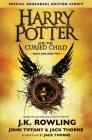
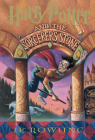
And isn't that what books can be, also, the source of motivating words?  Even JK Rowling's books about Harry Potter, as poorly written as one parent complained or full of hackneyed concepts like good versus evil or nerds, bullies and kids that don't fit, can be an epiphany for an eight-year-old or a thirty-eight year old.  It just takes a little optimism to overcome those pessimists.


25 July 2016

Books and Coffee -- Doesn't That Sound Like a Winning Combination?

Heard a great feature on NPR by The Kitchen Sisters about the vitalness of COFFEE.

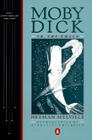
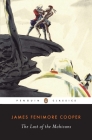
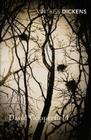
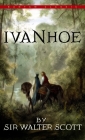
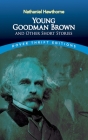
And do you know why there are so many letters and diaries from which to draw these coffee experiences during the Civil War/War Between the States?  This period -- early- to mid-19th century --  was witness to one of the most literate societies in history.  All these young men had read Walter Scott's Ivanhoe, James Fenimore Cooper's Last of the Mohicans and Nathaniel Hawthorne's Young Goodman Brown, Herman Melville's Moby Dick, Charles Dickens's David Copperfield and Alexander Dumas's The Three Musketeers.

Coffee and books go together like peanut butter and jelly, except while we see the continued strength and popularity of drinking coffee (except in Afghanistan right now), like peanut butter, reading books is becoming a bit of an untouchable, even deadly. Yes, in some places, you can get shot for having a certain book.  But, at the moment, USofA is not one of them, despite the Patriot Act and its progeny, the USA Freedom Act.  Read on!

22 September 2015

Banned Books Week - 27Sep - 3Oct 2015

Why exactly have a Banned Books Week?  Why have any highlighted/commemorated week/day/moment?  The answer is that these highlighted times are meant to remind us of especially good and bad times, to remember
We need to remember why something was a struggle, how something was overcome, and that some fights are never over.

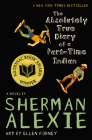
As Paula Garrett has said in her Perspectives piece today on WNIJ, while we affirm again and again the rights and responsibilities of our free and democratic society -- The United States of America, we still must stay vigilant.  Sherman Alexie's The Absolutely True Diary of a Part-Time Indian was first published in 2007, more than 230 years since the Declaration of Independence, 216 years since the Bill of Rights of Constitution of the United States were ratified, which included the First Amendment right to free speech, etc, and 64 years since the cited Supreme Court decision.  As one can see, the freedom to write and to read continues to be threatened.  Censorship, whether self-inflicted or imposed by others, will continue to be controversial.  We must be forever vigilant if we want to continue a free and democratic United States, with both rights and responsibilities accorded to its citizens.  Almost directly following this airing was a snippet of news from Thailand.  Because of the strict or broad-use of a vague law that prohibits any insults to the Thai monarchy, the local printer of the New York Times Asian edition refused to print the newspaper with the article reporting the king's hospitalization and speculating on what might happen should he die.  Self-censorship for self-preservation in 2015 reminds us again of the courageousness and unity in purpose of our ancestors in defining freedom and rights and then, fighting for them.  We can do no less to remember them each year with commemorations like Banned Books Week.

Speaking of freedom, WNIJ recently aired a different perspective on the founding freedoms as presented by Joe Flynn: the right to one's own opinion.  As I had learned and as Paula Garrett mentioned, with rights come responsibilities.  This is the basis of Joe Flynn's piece.  How do we maintain an opinion in the face of so much evidence to the contrary?  Do we stubbornly maintain our opinion simply because we have a right to have one?  With that right to maintain one's own opinion and the right not to listen to others' opinions, there are responsibilities:
  • the responsibility not to impose one's opinion on others; 
  • the responsibility not to cause harm to others or infringe on others' rights in the process of exercising one's own rights, and 
  • the responsibility (as well as the right) to change that opinion when one is exposed to additional information and experience
Reading helps us keep that last responsibility and right. (Travel, interaction with diverse groups of people and participating in activities like attending concerts and live plays also contribute to the ability to change one's opinion, but that is a topic for a different blog about reading!)  When we stop or do not start reading about different places, different times and people of different backgrounds of our own, we exercise self-censorship of a different nature.  It is not preservation of self, but preservation of an image of self -- pride going before the fall.  That is when we do ourselves as well as our nation a great disservice.  Again, we can do no less than heed the call of Banned Books Week every week. 

02 July 2014

23April -- The Birthdate of Will Shakespeare, The Deathdate of Will Shakespeare, The Birthdate of World Book Night, The Deathdate of World Book Night


Alas, poor WBN, we knew ye well.
   
  
Spreading the Love of Reading,
Person to Person
   
Dear World Book Night U.S. friend,

After three years in which thousands and thousands of you distributed over a million and half specially-printed World Book Night paperbacks across America, we are sad to announce that we are suspending operations. The expenses of running World Book Night U.S., even given the significant financial and time commitment from publishers, writers, booksellers, librarians, printers, distributors, shippers--and you, our amazing givers!--are too high to sustain.

This has been a remarkable, passionate undertaking, and it has been a success by all measures, except for one: Outside funding. For three years, the publishing industry and book community have very generously footed the bill and contributed enormous time and effort, and we are so very grateful for all the support.

We did receive some funds via individual donations, and we worked very hard to get grants. We did get some, but there are a lot of other worthy causes out there and only so much money available. We can't carry on without significant, sustainable outside funding.

From World Book Night U.S. Board Chairman Michael Pietsch: "World Book Night's first three years have been a profound experience for everyone involved. The altruistic spirit of the givers and of industry supporters have reminded us all of the transformative impact books have on people's lives, and of the power of a book as a gift. The World Book Night Board joins me in extending their deep gratitude to all who have taken part."

WBN U.S. Exec Director Carl Lennertz added: "Some of you know our names here, but I want to be sure you know these--Laura Peraza and Carolyn Schwartz. They have been here since day one, and they, along with you, are my heroes. Alia Almeida joined us this year and was a creative force. A list of all the booksellers, librarians, authors, and folks in publishing and at Ingram would be too long to include here, but they know who they are and I know they have loved being a part of this beautiful thing we did together."

We are staying on hand through the summer without pay to maintain social media contact with you all, to talk good books, and to announce the winner of the giver essay contest.

YOU, the givers, made it possible for WBN to reach its full potential. For us here at World Book Night, this experience has been life-changing, as we hope it has been for you and recipients of the books. Our gratitude to you is simply immeasurable.

With much love, appreciation, and admiration, thank you!
Team WBN U.S
So sad, but We shall rise again. Reading is a life function. Reading is forever.

24 June 2014

You Are That You Read

To continue with the notion that Reading is a life function, the American Pediatrics Association finally officially confirmed something that we suspected: reading to your children from Day 1 (or even Day 0 or Day -270) is a good thing.  (One of my former employers always used to say, don't make it a value judgment.  Something is not good or bad; it just is or is not.  Well, in this case, reading not just IS, it is GOOD.) 

Reading to a child at an early age leads to his greater literacy and intellectual development, further leading to earlier maturity and better career prospects, not to mention being able to spend more time with the child and re-read or discover some great books.  I think readers knew this years ago.  Perhaps those infants to whom they had read finally grew up to become pediatricians.

22 September 2013

Banned Books Week/Month

Since the beginning of September, I had been sporting a Banned Books Week pin.  Atop the promotion for fREADom, I had affixed an added message: "I SELL BANNED BOOKS."  This pin has provoked discussion.  I was wearing it when I went to the Saturday morning "farmer's market" on Haymarket Square in Dixon (kitty corner to the post office).  When someone asked what the pin meant, I launched into the "September is Banned Book Month.  It's to raise awareness of just how many books are still being banned or challenged," spiel.  The discussion began with two neighboring merchants agreeing that if people didn't want to read or watch something, then don't, but don't impose their views on others.  Somehow, it veered into Miley Cyrus's performance and then, how as long ago as "when Mary Dixon was little," kids were watching PG13 or R-rated films and counting how many times a character on-screen said a "dirty word."  I think the summation of that was that children are exposed to adverse conditions in all sorts of ways, but it doesn't mean they'll grow up bad.  I don't believe banned books got much play in that discussion.

Nevertheless, the sentiment is there.  Why are there those among us who want to hide books away from others or even burn them?  We have had titles ranging from a glossy pictorial biography of Marilyn Manson to the annual Witch's Almanac to Billy Collins's books stolen, and not by teenagers or destitute Wiccans or unprincipled poetry lovers.  They are discovered gone after older, theoretically more mature browsers leave the premises after having walked the entire store without purchasing a cup of coffee much less a book.  How can they possibly give money to such purveyors of sinful influence as we are?  It is best to smuggle away the trash so that innocent minds would not be polluted.  Patrons who are more honest or more optimistic that they can change our ways bring the offensive books to us and ask us to take them off the shelf.  We very kindly smile, wait for them to leave and return the books to their rightful places.

There're a lot of books I wouldn't read, mainly because of the poor grammar, lack of research as manifested in glaring errors in fact and science, fantastical plots in non-fantasy stories, etc, but I don't argue their right to exist, to influence young minds (to create yet more ungrammatical and poorly researched books).  Whether because the book encourages us to think differently about our surroundings, tells us more about a subject we thought we knew all about or nothing about and didn't care to know more about or simply entertains us, each book is important in its own right and thus, writers of books, readers of books and preservers of books are all important.

Hail, hail to books.  Fight censorship.  Advocate for expression, enlightenment, entertainment, ego-building, education, and all the good (if scary or difficult or unknown) stuff.  Read a banned book today.  Learn more at American Booksellers Foundation for Free Expression or www.bannedbooksweek.org.

26 June 2012

iStuff - Creating a New Kind of Mental Purgatory

David Gelernter's "Make It a Summer Without iStuff"

Minds need rest and work. They rest when you let them wander freely—go where they please, perch where they like. They work when there is a dangling mental rope for them to grasp hard and climb. But the iWorld fails to supply the child-mind with either of these basic needs. These fancy digital toys create a new kind of mental purgatory instead.

What do we need for a creative mind?

Read, read, read. Read everything -- trash, classics, good and bad -- Read! Then write. If it is good, you'll find out. If it's not, throw it out the window.
-William Faulkner

(Il)Literacy Continues to Be a Challenge in the USA

As I'm sure I have posted previously, one of the first volunteer activities I wanted to do when I arrived in Chicago, when I felt financially secure and under no obligations beyond the 40-60 hours/week demanded by my employer, was tutoring adults who wanted to learn to read.  I have written about this before: I see adult illiteracy as an affront to our nation and the responsibility of all of us Americans to confront and correct. 

It continues to be a challenge, as highlighted in NPR's current series Front and Center about illiteracy in the USA.  Illiterates are usually not stupid.  In fact, they are probably very smart, surviving in a world in which knowing how to read something as straightforward as a street sign can be a challenge, and that an honest but avoidable mistake could cost.  Do you really want to leave janitorial tasks to someone who might mix ammonia with bleach, because the contents of the jugs as well as the jugs look the same, but there were not giant letters, A and B, on them?  Do we really want someone who is smart enough to have started a business which creates jobs and value in the community to be limited to a day laborer job, because she has dyslexia or another neglected obstacle which prevented her from learning how to read? 

Unfortunately, I no longer believe I have the necessary time to be such a direct influence, but I do feel Books on First does its part and hope it can do more.  We of course provide books and magazines for sale.  There are reading discussions continuously with and among customers.  We allow people to come in and tutor.  We participated in and encouraged customers to participate in World Book Night.  Let me know what else you think we can do to help obliterate illiteracy, today in Sauk Valley, tomorrow in the world.

Aim globally.  Think locally.  Act personally.

17 June 2012

What Do We Learn From Our Fathers?

Happy Father's Day!

Lonna Saunders of Rockford learned from her father that there are no stupid questions.

For my father, while learning hard work, perseverance, the role of risk-taking in one's life as well as a healthy belief in luck and timing -- both good and bad, I learned to overcome the fear of failure as well as the fear of success.  I learned the value of family.  And, in the world beyond, I learned the love of reading, that "family" is much more than those related by blood or even village (or that a village is as big as the world), and that my father did the very best job he could to be a good father and he didn't do a bad job.

Thank you, Dada.

08 May 2012

Celebrating the Work of Maurice Sendak

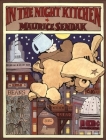
Many, many people are remembering Maurice Sendak, today dead at the age of 83 from complications due to a stroke.  I did not know the controversy regarding In the Night Kitchen.  Before we opened the bookstore, I saw it on a sale rack and felt scandalized that a book by the great Maurice Sendak was being sold at a discounted price, like an unwanted, unheralded amateur's effort.  I immediately bought it and have it still.  Larry read it and didn't see anything special about it.  It is a whimsical story and the controversy was about showing a little boy's penis!

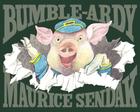
The first book Sendak published in 30 years was Bumble-Ardy, a allegory for the European Jewish Holocaust.  Another of his later and very personal works is "Pincus and the Pig."  Radio Q remembered Sendak by interviewing Glenn Dickson, part of The Shirim Klezmer Orchestra, on the "Pincus and the Pig" project.


17 February 2012

Is a Blind Person Illiterate If He Can't Read Braille?

NPR's "All Things Considered recently reported on the decline in the number of blind people who can read.  That's right.  They don't read in Braille, maybe out of practice or maybe never learned, so in essence, they can't read.  Does that make a blind person illiterate if he can't read in Braille?  With voice-activation, voice-recognition, voice-command and voice-converting technology as well as audiobooks, RSS feeds, and apps with GPS to tell people -- sighted and blind -- where to go and what's going on, what's to read?  Sigh!  Yet another example of printed bound books (and magazines and other reading material) going into the antiquity category.

There are apps that will convert text messages into read messages (someone's reading them, but not the recipient of the text message).  There are apps that will convert voiced words into text messages to be sent.  I think there was a joke about that on another program.  One person spoke in awe about this new technology.  His companion said, "Isn't that called a telephone?"  (It is and it isn't, as text messages are more popular than ever, enabling people to keep in touch while one or the other is sitting in a meeting, at the dinner table or even in a church service.  I think this blog post might morph into a question of whether a texter is rude if he can't devote full attention to his physical presence.)

In any case, I am sure the first reaction that one has to the notion that a blind person who cannot read Braille cannot read and therefore, is, by definition, illiterate, would be denial, repulsion and horror.  Illiteracy through the ages has come to infer low intelligence, akin to saying a person is stupid to his face.  That's too rude for our politically correct society.

I have tutored adults who have wanted to learn to read.  A question one always asks is why.  This is to find the motivation within, the reason for beginning and continuing on a big challenge.  One man, who had a slight disability, had wanted to become independent and move out of his home -- open a checking account, sign a lease on an apartment, do many of the things that most of us take for granted.  During the time I tutored him, he came once to a session empty-handed, without the dozens of index cards we had made as flashcards for his home study.  He said his brother had thrown them out, saying that he was getting too uppity and didn't have to learn how to read.  Now, that's a way to keep a man down.  Another person I had tutored -- an elderly Filipina -- had wanted to read to her grandchildren, wanted to read when everyone else was reading after dinner or on a Sunday morning, and wanted to be able to shop in a big American grocery store without her son out to accompany her.  It was truly a struggle for her and I felt that I was too often impatient with her and not at all a good teacher.  I still felt bad even when her son and daughter-in-law thanked me, telling me she had learned a lot and that they would continue to help her learn as they moved the family out of Chicago to the suburbs.

So on one hand, we have adults desperately seeking redress for illiteracy, either because of English being a second language or childhood learning disabilities or family circumstances.  On the other, we have adults going blind and saying, why learn to read when there are all these other options, as if learning to read -- whether in written English or in Braille -- is an exercise for children.  We are not faced with lower i.q.; we're faced with laziness. Sorry to say, I think the answer is yes, if you can't read, you are illiterate.

10 January 2012

Hail to the New Ambassador for Youth Reading

Walter Dean Myers is best known for his harsh, urban grit writing for young adults, touching on the pressure of gangs, the plight of broken families, the grimness of poverty and lack of legitimate opportunity, the horror of prison, and the loneliness of being different.  He will be our next Ambassador for Young People's Literature, a position which was created in 2008 and is chosen by a committee formed by two groups: the Center for the Book in the Library of Congress and Every Child a Reader, a nonprofit organization affiliated with the Children’s Book Council, a trade association for children’s book publishers.  It was first held -- and thus defined and pioneered by Jon Scieszka, a young children's author best known for Trucktown and then, by Katherine Paterson, best known for Bridge to Terabithia.  He is championing early reading advocacy by parents and other family members, citing his mother's love of true romance magazines.  As a baby, he listened and watched his mother with finger on the page, slowly but surely reading aloud to him.  By four, says Myers, he could read to her as she ironed clothes.  Sigh!  What a story

Growing up in my household, my older sister and I were obsessed with reading, to the detriment of doing more useful tasks, like setting and clearing the dining table.  To be able to go to the Village of Babylon Public Library was a treat.  I loved visiting my maternal grandparents' apartment, because my three aunts (some fourteen to sixteen years younger than my mother and thus, only a decade or so older than I) had left books galore on the shelves, including Jacqueline Susann's Valley of the Dolls, from which I learned at a tender age all about show business, pill popping, sex, mental retardation which does not preclude a singing career or need for sex and breast cancer, and Edith Hamilton's Mythology, from which I gained major knowledge about the Greek and Roman gods.  From the West Babylon High School library, I signed out anything and everything, discovering the OSS, Wendell Willkie and Phillip K Dick.  I also translated what I saw on screen to sought-after reading material.  Just like today's movie goer looking to read Harry Potter or Suzanne Collins's Hunger Games, I wanted to know where my favorite movie (which I saw on television) Guys and Dolls came from, which is how I discovered Damon Runyon. 

My world has narrowed somewhat as I am not as patient with writers or unhappy endings as I once was.  Anyone can take credit for my love of Georgette Heyer, especially my first -- Frederica, since I can't seem to remember when I first happened upon this great English Regency-era writer, from whom all of today's romance writers owe much.  All in all, I applaud the appointment of Myers (as I applaud the position of "Ambassador for Young Adult Literature") and wish him every good fortune in continuing the work of getting more people to read.

24 November 2010

Gratitude, Books on First Style

Read about one of Brenda's favs
I write this today, as you all know we have limited access to internet.  "Limited" includes time, space, inclination, money, and other resources, although there is the philosophical argument that none that I have named are resources.

Thank you, Kelly Dunphy, for continuing to keep us in the loop on family, friends, and even what's happening in Dixon & environs.  I thank her for all those years ago nonchalantly giving us a used KitchenAid mixer (ostensibly because she got a new one) with three attachments (of which I use one extensively), so that I have been able to bake.  Baking has given me a sense of organization, peace and purpose that is rare in the world (are those resources?).  The exercise has also given Larry and me a lot of carbs, albeit delicious ones.  I am not good enough a baker to go commercial, so the only cookies or teabread (un)lucky Books on First customers would be able to have are free (and sometimes burnt) offerings.

Thank you, Larry's siblings and cousins, especially Bridget Barry, Pat Dunphy, SC ("Young Charlie") Dunphy,  Mike Blackburn and James Romeo Blackburn, for helping us out at the farmette and for keeping us in the loop on the other end of the Dunphy family, and thus, keeping Carolyn Chin feeling like she's in the Dunphy family.  Larry is not the most reliable conduit of relaying what's happening, but I have the good feeling most of the time and that's what counts.  We still have a freshly killed and dressed heritage (Spanish Black) turkey for sale if anyone's interested.

Thank you, All the Customers of Books on First, but especially some -- too numerous and in some cases, too shy, to be named, in Dixon, Amboy, Sterling, Polo, Grand Detour, Centralia, Franklin Grove, DeKalb, Rockford, Chicago, Oregon (the town and the state), Iowa, California, Massachusetts, North Carolina, Germany,  Ireland, Kenya, and beyond -- who have supported us even as factories closed and taxpayers voted down school budgets.  I have always maintained that wonderfully brewed coffee and professionally made lattes with delicious baked treats -- some imported from Chicago (e.g., Swedish Bakery in Andersonville, D'Amato's on Grand & May, Middle Eastern Bakery on Foster) are affordable luxuries, and it is gratifying that so many of you agree.  BUT most of all, BOOKS are Everything that anyone can want (or give) in Entertainment, Enlightenment, Enjoyment, Education, Engagement, but to name a few.  We happen to sell the printed, bound kind and will continue to promote reading in all its forms (especially if you buy it from Books on First).

Thank you, Authors, Researchers, Poets, Illustrators and Other Writers and Artists, for continuing to do what you do, for whatever motivations.  We must include established book publishers in our appreciation, however misguided they have been on how to sell a book, because history will show that writing is extremely important for preserving history, documenting ideas, sharing experiences, fueling imagination, but writing is nowhere without being published.  And, a hardcopy printed bound book still beats out when there's no clear line of sight for the satellite dish, when the power runs out, when you're hunting down an old favorite read to give to your favorite reader, when you want to stretch out in the bathtub or the beach, or when Books on First with free wi-fi for its customers is closed.  
 
Thank you, All you other creative types, finding solutions to fit this world so that there will be a world for our grandchildren and their grandchildren.  My question has always been why don't we take care of situations before they reach crisis proportions?  (Yes, yes, I know the answer: when weighing cost-benefit, we're not at the tipping point yet!)   Take the nutria, for example.  Using this rodent's fur for fashion (again) as we attempt to eradicate the swamp rat only makes sense, from popularity in our grandparents' time to being "Righteous Fur."  I'm hoping it can totally replace sable from the geographic area of Russia/Mongolia which remains one of the few animals whose fur is prized yet is unable to be raised in captivity. Or, the "Asian Carp" (actually 8 kinds of fish, but mainly, the silver carp, rebranded silverfin) which has been taking over rivers and canals in the United States, and our response when DNA had been found near (and thus, threatening) Lake Michigan, has been poison, dynamite, electrocution, wringing our hands, and appointing a czar to wring our hands for us.   It seems like catching, cooking and serving the fish as food (actually raised in aquafarms in Vietnam and elsewhere) is a natural solution.  In a different, but related vein, is a new kind of aquafarm cum hydroponic vegetable farm, growing lake perch and arugula energy efficiently and water sustainably. So much creative solutions to our world which is growing both in population and demands on the environment.  Especially here in the United States of America, with Manifest Destiny, we should and will be the ones to pioneer forth and shape our own future for the better.

Thank you for reading (and thanks to Sinead O'Connor for this great song which I have heard numerous times while participating in NIA.  Happy Thanksgiving.
12 February 2010

Is Reading No Longer an "American" Pastime?

In the same week that I participated in a webinar (now that's a newly created word, eh?) about the demographics of usage of electronic devices in which a poll question was posed: What device do you use most for your entertainment? and books or even electronic books like Kindle or Nook were not included as a choice of response, I am able to bring you the following Wall Street Journal article.


09 February 2010

Browsing and the BBC World Service

When I am home on the weekends, "home" being Lee County, Illinois, I am able to fall asleep and wake up several times during the night to the BBC World Service offered on WNIJ, our local NPR station out of Northern Illinois University in DeKalb. This begins at midnight, or "Six o'clock, GMT." That's actually how I knew that it was 2010, Auld Lang Syne time, by the BBC already telling me it was 6am.

I had wanted to share a story about "middle age writers," those writing and being published at an older age, which was defined as age 50, but I am unable to find that radio item, the BBC websites being handled differently from www.npr.org. I recall a bit of "cheating," since they spoke quite a bit with someone who is only 49, having published a book at age 48 (sorry, I was not fully awake to figure out which author was speaking). It was an interesting discussion on whether being published is as important as being read, and with electronic books, self-publishing services and the internet, perhaps writers over the age of 50 should look beyond the traditional publishing paths. I don't quite know why the piece was produced, focusing on "older beginner" writers.

Browsing the BBC website, I did find something rather interesting about Vietnamese coffee, which I share with you now. Warning: it appears that programmes become "available for listening" and then, that availability expires. There is nothing wrong with that if they are indeed selling content (I have yet to write that promised post on "content") as that's the producer's prerogative. I am simply saying that if you are reading this a year or even a few months from now, you may be out of luck.

"Browsing" is generally not in the province of the world wide web, despite that word being used for what we all do on the internet. "Browsing" involves serendipity, curiosity and satisfaction of that curiosity, handling in order to consider whether this item is the right fit for the browsing person's life. However, I will admit this once, that I really had a browsing experience online.

11 January 2010

Consumer Electronics Show - Las Vegas Odds on E-Readers

CES has been a big deal for decades. At some points in the past, it was a bigger deal to one group of people than to another. Kudos this year to consumer electronic companies which, despite the economic down, pin their future on researching & developing their way out of the doldrums. Of course, we are most interested in e-readers (which, as you may have noticed, we always file under the label of "printed bound books" -- our little code).

There's even one using "ambient light" to have the eye see color!

And, then, there are the combination netbook/e-reader!

21 October 2009

Join the Nook

Just a quick mention: Barnes & Noble has joined the ranks again of those pioneering into that world of offering readers the ultimate in portable electronic reading medium. Every time someone does, we progress a little closer to becoming that futuristic place which science fiction writers (and readers of the classic genre) saw. How long ago has it been since I read of two kids finding a dusty old printed, bound book while playing in an attic, opening it up and quickly losing interest in the artifact -- the most disappointing point being that when they turned the paper page back and forth, the words were still the same, not refreshing with movement to a new point in the book? (Someone, quick! tell me what book it was I was reading!) BN has conquered yet another objection: sharing a book. With its Nook, a reader can buy the book, download it into the Nook and share it for 2 weeks with anyone he wants (who also has a Nook). During that time, the original purchaser of the e-book wouldn't have access to the book, just like as if he had lent someone a printed, bound book. Hmm, why only 2 weeks? Is BN encouraging people to become miniature lender libraries? I mean, can the friend renew the book for another 2 weeks? Can the original buyer then lend it to someone else? Can the friend lend it to someone else? Can the original buyer simply give the friend the book? For one thing, this would certainly cut down on people losing books due to lending them to irresponsible people who don't make the effort to return them to the original owner. (Not that I'm complaining. I recently sold Ayn Rand's Atlas Shrugged to a woman who had searched for her prior copy on her bookshelf with the intent to re-read it (in these interesting times -- see my website review saved somewhere earlier in this blog) only to find it gone. Probably not stolen by a burglar who had crept into the house with the sole purpose of taking Ayn Rand. BN should think about that sage piece of advice: "Neither a borrower nor a lender be." Cash, books, ... all good.

Still, there are people complaining about the cost... the cost of the Nook, the cost of each title... Grumblers who expect all things electronic to cost 99 cents or some small multiple thereof and watchers of the walmart.com vs amazon.com downward spiral seem to think that there are no more costs associated with e-books once costs of printing and distribution are discounted. How much do they think printing and distribution actually cost? And even if we did say, ok, no more "free" freight to recoup somehow along with the cost of ink and paper, what about throwing a little something to the authors (yeah, back to those "I just want to be read" socialists again)? How about marketing costs since no one wants to buy a book he never heard of (even "viral" Youtube videos cost $$ to make)? How about the hourly wages and health care benefits of junior editors and word processors? How about the cost of software development and silicon (or whatever is the current wonder conductor) chips made in third-world firetraps? Not to mention electricity charges and ISP fees?

I am in the midst of enjoying the advance reader copy of a new title by Jasper Fforde -- Shades of Grey, which has a "street date" in December, maybe not even in time for Christmas (what kind of marketing is that?). In all honesty, I enjoy having an actual, physical bound ARC to hold and carry around and read, but if sending me even a .pdf file will cut that $25.95 book down to a list price of $9.99 , I'll accept that. However, we may no longer be able to discount it by 20% to acknowledge our loyal customers' snub of walmart.com and amazon.com. More on the actual book in a later posting. TTFN.

16 October 2009

Giants Battle, David Might Get Crushed Underfoot While Looking for a Stone to Sling

I share with you a Wall Street Journal item from today (Warning: as [blogger] is not among the choices for sharing, this link is not a permalink and thus, may disappear on us at WSJ.com's convenience).
The article is about walmart.com figuratively rolling up its sleeves and taking on amazon.com. There must have been taunts exchanged and tongues stuck out at some point, as walmart.com CEO Raul Vazquez is quoted: "If there is going to be a 'Wal-Mart of the Web,' it is going to be Walmart.com.... Our goal is to be the biggest and most visited retail Web site."
Walmart.com wants to be the biggest and most visited retail Web site?? Classic business school strategy studies says, first pick off the competitor's fringe markets and then, when it doesn't have additional legs to stand on, attack at its (seemingly) strongest point. Gee, had walmart.com been attacking amazon.com's toaster oven and disposable diaper sales online as well as its brick-and-mortar big box bookstores cum acre parking lots which also ban non-family-oriented music CDs and sell five kinds of lettuce all this time and we weren't paying attention?

So, while these two duke it out, the publishing industry is supplying its fingers for ammunition and big-name authors are weighing in.

WSJ probably could not get Stephen King to comment, so Dean Koontz and James Patterson (sometime co-author with Maxine Paetro, Michael Ledwidge, Gabrielle Charbonnet, Martin Dugard,... sorry if I missed anyone else) did the honors:
James Patterson, whose coming novel, "I, Alex Cross," is being discounted from $27.99 to $10, said he was happy to be in Wal-Mart's top 10. However, he warned any industry that sets low price points may later have a difficult time re-establishing those prices. "Obviously e-books have gotten this thing going," said Mr. Patterson. "E-books are terrific and here to stay. But I think that people need to think through the repercussions....But I'm not taking sides....I'm not the endangered species here."
"I'm not the endangered species here." What does that mean? No matter what happens to books -- any kind published by anyone bought from anywhere, he'll still get his advances and royalties? Who then is the endangered species, Mr Patterson? Is his quote just like a character's non-sequitor thoughts or is this poor reporting/editing?

(By the way, steet date for his new book is November 1, 2009. Books on First offers 20% all adult hardcover fiction. Reserve your copy now!)

Dean Koontz expresses conflicting emotions of the writer's need for recognition and readership (see blog post on "aspiring" writers) and his acknowledgement that it's actually a good thing to have small, independent bricks-and-mortar bookstores where a writer and his work can be discovered by a new reader a rainy day browse or through trusted bookseller's personal recommendation.
"Any time people are fighting over your work it's a good thing, especially when you've worked all those years hoping it would be fought over," he said.

Mr. Koontz said he's more worried about the independent bookstores. Although most limit their stock of best-sellers, a price war on the most popular books may hurt.
Thank you, Mr Koontz. Keep on feeling conflicted; that means you're thinking ahead of tomorrow to day after tomorrow. (By the way, just in time for holiday giving -- street date is November 24, 2009, is Dean Koontz's latest book, Breathless.)

Stephen King too looks kindly on us indies although his sales are nothing to sneeze at. He has a book, Under the Dome, also out November 1, 2009, and also, discounted by Books on First at 20% off list (no cover art yet available for posting).

All in all, we independent booksellers cannot sit on our hands (or wring them) while bigger, better-funded retailers trample all over the published book landscape.

I am especially interested in the comments that WSJ.com articles sometimes generate. This one has inspired over 30 of them at last look, and it 's a (generally) good discussion about capitalism, civil society, culture, elitism (whoa, Sherman Alexie!), technology, socialism, ...

Capitalism and writers: So, these price reductions supposedly would result in reductions in an author's royalties. One comment was about how no one is forcing someone to be an author. If it doesn't pay, then, don't be a professional writer. There's still distribution, recognition and readership to consider. I am trying to imagine Mr Patterson with a website offering a couple of free chapters and a BUY NOW TO CONTINUE READING as well as DONATE button, because yes, that's what might result, when there are no publishers to nurture, edit, be passionate about, promote and publicize, print, ... [repeat] writers new to a genre, less known authors (critically acclaimed or otherwise good or bad), and eventually, well-known and bestselling authors like Koontz and Patterson. And, that's just the publishers. I haven't begun to talk about independent booksellers and the costs they incur to offer the value they add. Why stop at watching walmart.com succeed at selling hardcover copies of titles listing at $25-$30 for only $9 but fail to become "the biggest and most visited retail Web site," or amazon.com survive but struggle to maintain its community of reader-contributed reviews and its mighty search engine and network of small used & rare book vendors in the effort to serve two groups: the "I know what I want and I want it now buyer" and the "let's see what might be interesting to read today reader"? Just cut out the middleman entirely.

Another wisdom I learned at graduate management school -- price competition is bad for everyone. It's a downward spiral and lots of stakeholders lose, including readers.

Think about the day after tomorrow, when we must all find a reason for existence that goes beyond the numbers.

I just found Graham Beattie's Book Blog in which you may be interested, also. (This does not happen everyday, as "browsing" on the internet is a lot less fun than browsing in a bookstore -- my opinion.) He has a great quote from the author of The Art of Racing in the Rain Garth Stein (speaking at a gathering that Larry and I did not attend) about selling books. Check it out!