Featured Post, or Blast from the Past

And Father's Day Is STILL a Good Time to Buy a Book

Because Dad (and Gramps and Poppa) deserve the thought that counts    

Showing posts with label printed bound books. Show all posts

08 November 2016

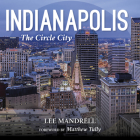
Indianapolis, There We Went

It was not the result of seeing this new book of wonderful photographs that Larry & Carolyn did a little jaunt to Indianapolis, but it could have been.  Indianapolis is the capital of the State of Indiana, as it should be, just like the capital of Illinois should be named Illinoiston, the capital of Texas should be called Texasville and the capital of Wisconsin should be known as Wisconsinopolis.

It was beautiful weather and not a lot going on (meaning no major races or street festivals or protest rallies).  The drive was less than 5 hours, even with a stop at a highly recommended diner for breakfast, whose name we can now tick off the must-do list (and not pass along).  Either those acquaintances who recommended the place never had a bad meal in their lives or have a very broad definition of what "good eats" is, considering I know for a fact that all of them have eaten at Dixon's Orom with chef Mark Framke at least once.  (Hint: no comparison and I wish Orom would serve brunch again to remind everyone one of what a good first meal-of-the-day really means.)

Back on track, with the time change, we were at White River State Park by 1pm and enjoyed really good parking rates: $3 for 3 hours, $6 for 6 hours, $12 for 12 hours.  This is good pricing strategy. We were not the only ones opting to pay possibly more than $1/hour "just in case" we wandered past 4pm.  That area, west of the Capital and central business district, is still pretty central, boasting not only the White River meandering along, but also, gateway to the Indiana State Museum and Eiteljorg Museum of American Indians and Western Art, as well as the canal which runs parallel to the river in Indianapolis, conceived in 1836 as part of the project to link the Wabash-n-Erie Canal to the Ohio River, it was never finished and is now a refreshingly clean stretch of water for paddleboats with beautiful walks, quiet memorials and residences alongside it.


What can I say about Indianapolis, but that it is a very book-friendly, bike-friendly town.  There were sculptures with books all over the city, sort of combining Tiny Libraries with three-dimensional art. I even saw people reading the titles in the sculpture near the Soldiers & Sailors Memorial in the heart of the city, looking to borrow reading material.

You noticed that I did not mention the Indianapolis Museum of Art. It is not located downtown. It is not on the Northeastern edge of downtown, as the bartender (from New Orleans) at Revolucion believes.  We would not even say that the museum is on the Northwestern edge. It is a good 5 miles from White River State Park which one could say is on the western edge of downtown (if we call the Capitol Building the Heart of Downtown), in a leafy area just off Dr Martin Luther King, Jr Street, which heads northwest out of Indianapolis proper, past the greater portion of a very large cemetery. The area is so leafy, in fact, that the large sign marking the corner of the institution's property at 38th Street.  By the way, for all that the IMA has an address 801 West Washington Street, the access from MLK Street is blocked and it appears to us that the IMA is the only address on West Washington Street.

Indianapolis is very walker-friendly (barring the aforementioned IMA), also, even while major interstate roads surround and bisect the town.  We stayed in Fountain Square which really hops on First Friday (as it sometimes does at Dixon's Second Saturdays).  We already mentioned the nouveau Mexican bar with food, Revolucion (sorry, don't have enough HTML savvy to put that accento on the o).  We are told that the al fresco bar in back has a whole different vibe, but did not check it out.  The fountain for which the square is named (there are actually two of them now) is not as large as in photographs, but quite interesting. The one coffee place closed, but I had read in the local newspaper that an upscale (really, is there any other kind?) chocolatier would be coming into the space and the "coffee bar will remain."  It doesn't seem possible, but possibly, coffee is not the preferred drink in Indianapolis.  I only just remembered there was a Starbucks on Monument Circle when I searched for "Starbucks in Indianapolis." They are not falling all over each other like they do in Chicago.  There was a fairly expensive (read, "Starbucks pricing") independent place walking just over the highway on Virginia Avenue from Fountain Square towards downtown in the very trendy Fletcher neighborhood. Here, at Calvin Fletcher's Coffee Company, the price of everything is different.  That is, a cup of decaffeinated coffee (small or large) is different from a cup of regular house brew (small or large) is different from the Ethiopian (seems to be another regular brew) is different from the daily special "Now Roasting." There's a lot of lounging around at low, mismatched tables and chairs and by the tip jar was a sign announcing which not-for-profit organization would receive all the tips for the day. I liked that I could not smell the coffee roasting, To me, when green coffee is being roasted, the place smells like there are tires burning in the room. I perhaps should not take it literally that there was coffee "now" roasting.  It was nice.  We sat by the front window, which had a miniature frontier home displayed and there were miniature rugs and other household objects and animals.  It was a little dark and there were quite a few people there, so I did not walk around and see if there were local crafts to tempt my purse.

We had already stopped by Wildwood Market, and purchased every non-perishable foodstuff made in Indiana for personal enjoyment as well as gift-giving. It was good to see such a place in Fountain Square -- local, owner-run, reflective both of the neighborhood's needs and the proprietors' vision.  We kind of hope that sums up Books on First.


21 September 2016

The Book as a Weapon

Heard something on NPR this a.m. that started my stream of consciousness thinking: a follow-up story on the police shooting of a black man who was sitting in a parked car.  The police officers who shot the man alleged that "they saw him with a gun."  His family disputes that, saying he was reading a book.  Wow.  Just think.  The book as a weapon.

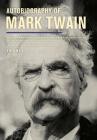
Of course, a good hardcover book, maybe The Autobiography of Mark Twain, Volume 3, weighing in  at 792 pages or 3.7 pounds would be physically a very good weapon for someone who can bench press a few kilos or throw a mean discus.

And, they always say that the pen is mightier than the sword, although the sword is a lot swifter.

But, as a bookseller, I have to go with the concept that books can be weapons, too.
Some people may say I'm being flippant or facetious, but no, not at all.  Why do you think there's such a thing as a banned book?  Books have been known to slay ignorance as well as boredom, oppression, the status quo and time.  Of course, one actually has to read the book, not simply weigh it or throw it.  On the other hand, books are more available and cheapest in socialist countries, because leaders know that they can also kill free thought and creativity while promoting a specific political or social viewpoint. Think of books like poison, both fast-acting and undetectably slow, spreading a vicious thought or an innovative new vision.

Books can be weapons of mass destruction. Think of books like sunshine vanquishing darkness and barbecuing vampires. Think of books lighting a fire under apathy, jumpstarting an inventor, scientist or entrepreneur, inciting a riot -- like it did in Charleston, NC.

Unfortunately, some activity is just too dangerous for some individuals, like driving while black, like parking while black, like reading a book while black.


25 July 2016

Books and Coffee -- Doesn't That Sound Like a Winning Combination?

Heard a great feature on NPR by The Kitchen Sisters about the vitalness of COFFEE.

And do you know why there are so many letters and diaries from which to draw these coffee experiences during the Civil War/War Between the States?  This period -- early- to mid-19th century --  was witness to one of the most literate societies in history.  All these young men had read Walter Scott's Ivanhoe, James Fenimore Cooper's Last of the Mohicans and Nathaniel Hawthorne's Young Goodman Brown, Herman Melville's Moby Dick, Charles Dickens's David Copperfield and Alexander Dumas's The Three Musketeers.

Coffee and books go together like peanut butter and jelly, except while we see the continued strength and popularity of drinking coffee (except in Afghanistan right now), like peanut butter, reading books is becoming a bit of an untouchable, even deadly. Yes, in some places, you can get shot for having a certain book.  But, at the moment, USofA is not one of them, despite the Patriot Act and its progeny, the USA Freedom Act.  Read on!

30 May 2016

I Want To Be a Paperback Writer

9781579129521
Fifty years ago today, The Beatles released its "Paperback Writer," a really fun song with a concept which young 'uns today probably would not understand, unless they are voracious readers of "junk" like romances, murder mysteries and science fiction.  According to the Wikipedia chronology, the A-side single (the B-side was "Rain," another hit song) was released in the USA before in UK.  I do not have a clue why, because I assume that the concept is the same -- "pocket books" or mass market printings were the successor to "pulp fiction," cheaply made books of popular fiction (I cannot think of a non-fiction genre that routinely gets printed first and maybe only in tomes which are 0.85" H x 6.74" L x 4.22" W, weighing approximately 0.35 lbs with 300 pages or less, although some older ones like I'm OK, You're OK and Art Linkletter's Kids Say the Darndest Things were also popular mass market paperbacks.)  This song is reported to have been the result of a challenge from John Lennon's aunt while The Beatles were near or at the height of their popularity.  She asked if they could write a song that wasn't about love and Paul decided they would write about a book after espying Ringo reading one.

Sure, most writers aspire to be published and definitely, published in a large, hardcover format.  Sometimes, we have paperback writers which become so popular and famous, their books get republished in hardcover, mainly for fans to buy and keep forever, or to match the new upmarket buying habits.  That's what usually happens -- the popular writer's first six or twelve books are in pb only and then, suddenly, the next book in the series comes out first in hardcover.  And, of course, you have to read it right away, not wait at least one year (or more!) to buy the mass market paperback which matches the others in your set.  Then, the publisher circles round and back, and the first title in the series is printed as a hardcover.  One customer mistakenly reserved a recently published hardcover, believing it was a new title.  She was not happy when she figured out she had read the book a long time ago.  "I hate that," she had said. "You get all excited about reading a new book and they're just trying to make more money off of you.  It gets reprinted in hardcover and then, in e-book and then, in that style they call 'trade paperback' and then, that new 'premium paperback' which is taller and has a new cover.  Just write the next book."  Aww, let the paperback writer get all excited about leaving that label behind.  He's a serious writer now, published in hardcover, not some schlock wordcounter who gets to see those words in a paperback which gets left behind on jet plane seats and vacation homes or passed around among buddies at lunch or family with similar tastes at Thanksgiving get-togethers.

9781501112461
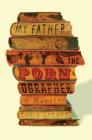
And then, there's porn, which almost always comes in cheap paperbacks, even if a big fan is going to keep it forever. I knew someone at Vassar who told me she had written a few pornography books.  The contract had rigid guidelines of how many words, etc, and upon the publisher's acceptance of the manuscript (should "manuscript" be derogatorily put in quotation marks?), the writer received $300 and abdication of any additional rights to it.  From what I have read, I think that rate must be about the same now for the "serious writer," but for a paperback porn writer, that was on the low end, if Chris Offutt's father is to be believed.  And,
we all know the additional "rights" are where the money is, although we were not sure what those additional rights were for porn books (overseas sales? movie? subsequent hardcover?)

Still, as an aspiring published writer -- paperback or otherwise -- I was impressed.


23 March 2016

What "Independent" Means

The Independent, a major British daily morning newspaper, announced that it will stop printing a paper copy and have only online editions.  What this means for fish & chip mongers (who probably don't wrap the fried foods in newsprint anymore due to Health Department complaints), I don't know.  What it means for readers who like to sit with a cuppa and the actual Independent newspaper, though, is that there will be one less civilized ritual in the world.

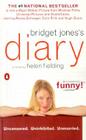
NPR very interestingly marked this event by interviewing Helen Fielding, the author of the Bridget Jones diary series, among other titles.  "Beloved" Bridget Jones of paper and screen got her start in The Independent.  Everyone and his mother was writing about their ordinary lives in a column in the newspapers in the 1990s, and Fielding, working at this paper -- which the NPR Morning Edition announcer kept wanting to be categorized as "left-leaning," because after all, it's called The Independent -- as a junior reporter, too was asked to write about her life as a 30-something "Singleton."  Too shy to reveal her own life, she was able to introduce Bridget Jones to the world as representative of that not-so-rare-but-special breed of female.

While lots of similar columns for hapless singles of all ages, honeymooners, mothers of young children, widows, et al followed this success, could this have been started at any other newspaper besides The Independent?  Hard to say, easy to claim that no, only a "left-leaning" independent newspaper would have the cojones or the lack of pretensions to give the go-ahead.  Nowadays, of course, in this age of blogging, facebook updates and real-time tweets, the younger generations probably could not imagine why it even had to be fictionalized. Why not let it all hang out?

Would Bridget Jones's Diary have come into being and been so wildly popular without the column?  That too is difficult to say, but either way, they did get published as books


30 November 2015

Is This Cool or What?

Happy 141st Birthday, Lucy Maud Montgomery! 


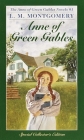
Who? you say. L.M. Montgomery wrote the classic Anne of Green Gables which spawned a series, which spawned films, television shows, anime and more, including an industry on Prince Edward Island which is second to none!  Sorry, this series is not currently on our Try a New Series table, but just ask for the box set whose cover describes Anne as "The Most Beloved and Timeless Heroines of All of Fiction."

Years ago, I had read about the Green Gables Farm being the Number One destination wedding location for Japanese couples.  I can't recall if this is where Anne Shirley and Gilbert Blythe married, but their story is certainly very romantic, starting in grade school with Anne being teased by Gilbert for having red hair, and, after getting over that hump and Anne clueless about Gilbert falling in love with her, ending with Anne finally agreeing to marry him (sigh!).

This is considered a Young Adult series, but because it starts with Anne as a young orphan, it traditionally is put into the Children's section of our store (as well as others').  It probably should stay there as being a little more optimistic than what young adults want to read nowadays (just Carolyn's opinion!)

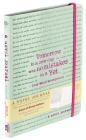
But, wait, there's more I have to share with you.  Now in, the reason for the title of this blog: A Novel Journal: Anne of Green Gables.  This is one of a series of journals, yes, those "blank books" into which one can write one's stories, thoughts, rants, even romantic musings, philosophical logics or mathematical theorems.  What makes it so cool?  The words ("lines") of the book, in this case Anne of Green Gables, form the "lines" of the journal.  You can read (with a Mighty Bright magnifier in my case) the novel in the pages before or as you write your own.  You have to see it to appreciate it. (Best to see it in person; so come in today!)


Our website, as "powered" by IndieCommerce and Ingram Book Company, cites L.M Montgomery as the "one of the most famous Canadian writers of the twentieth century."  Judging by the number of you who said, "Who?," this must be correct, since I can think of a lot of writers who might be Canadian (not to mention actors and newscasters), but not think of Canadians who might be writers.  Google celebrated today with a series of animations on its homepage, which I cannot recreate for you, because I don't know how.  I don't know why the webmaster for The Guardian online newspaper doesn't know how, either, but its article simply has screen shots.  Oh, Googlemaster, help us spread the word by giving us links to Lucy's b-day celebratory home pages.


31 October 2015

Why Is This a Norwegian Bestseller?

The newest bestseller in Norway is not the Stieg Larsson follow up, The Girl in the Spider's Web by David Lagercrantz (not yet, in any case).

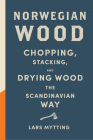
It is a compact, hardcover book about chopping, stacking and drying wood for winter fires.  Per the publisher's rep who spoke at the Heartland Fall book show earlier this month,  Norwegian Wood: Chopping, Stacking, and Drying Wood the Scandinavian Way is not just a how-to book, although it is that; it has become a must-have for coffeetable tops and bookshelves in direct sight-line of guests.  One wants to show off this beautiful book, not only because it is, in a lean, austere way with its stark photographs and its no-nonsense writing, but because it represents a cause célèbre that almost every Norwegian and, in fact, almost every Scandinavian wanted to celebrate -- (choose one:) the reduction of fossil fuel emissions, the ideal of a back-to-nature lifestyle, the hope of a not-yet-lost sense of being able to survive without modern conveniences like central heating and gas-piped fireplaces.

Now, you too can celebrate as this book arrives in America and to Dixon, Illinois, at Books on First.  Reserve your copy today or put it on your Christmas list (to give or to receive).  You will be more than pleased at the practical side as well as the personal aesthetics, not to mention being able to celebrate a cause not yet even defined.
Your Shoes Can Walk an Extra Mile in a New Direction

Whether your shoes are now too tight, too loose, too scruffy, too out-of-fashion or just don't give you joy anymore, you don't have to feel bad about giving them up. The Kiwanis here in Dixon are collecting shoes for several worldwide projects -- the not-so-bad, gently used or just too good to lose shoes become projects to train people to get them refurbished and sold again.  The soles/souls of no-longer-even-look-like-shoes become material for playground cushions (isn't that where old tires go, too?).  They want to collect 7500 pairs by 14 December 2015.  Can they do it? Let's have a reality show and see!
UPDATE AS OF 15APRIL2016 -- DIXON KIWANIS WILL CONTINUE TO COLLECT SHOES UNTIL THEY HAVE A TRUCKLOAD.  SO, THOSE OF YOU LOOKING TO SPRING CLEAN (SUMMER CLEAN?) THOSE SHOE RACKS, YOU STILL HAVE TIME TO BRING THOSE JOYLESS SHOES TO BOOKS ON FIRST FOR A NEW LIFE AS FIXED UP VINTAGE PRODUCT FOR SALE, TRAINING MATERIAL FOR WOULD-BE SHOE ARTISTS or IF NOTHING ELSE, PLAYGROUND SAFETY GROUNDCOVER!
Here at Books on First, we are one of the drop-off points, a plus for being a bricks-n-mortar location (try that!, amazon.com).  So, as you change your life and want to change the lives of your departing shoes, too, think of the Kiwanis project.

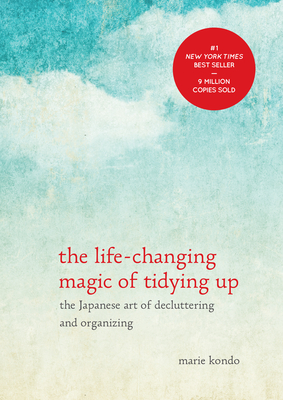
And, as you roll up your sleeves and change your life by tidying up, after your shoes, take a look at your books.  If a few titles no longer bring you joy, bring them to us at Books on First as we set up our Second Chance Saloon, with used and out-of-print books.

22 September 2015

Banned Books Week - 27Sep - 3Oct 2015

Why exactly have a Banned Books Week?  Why have any highlighted/commemorated week/day/moment?  The answer is that these highlighted times are meant to remind us of especially good and bad times, to remember
We need to remember why something was a struggle, how something was overcome, and that some fights are never over.

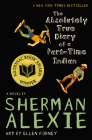
As Paula Garrett has said in her Perspectives piece today on WNIJ, while we affirm again and again the rights and responsibilities of our free and democratic society -- The United States of America, we still must stay vigilant.  Sherman Alexie's The Absolutely True Diary of a Part-Time Indian was first published in 2007, more than 230 years since the Declaration of Independence, 216 years since the Bill of Rights of Constitution of the United States were ratified, which included the First Amendment right to free speech, etc, and 64 years since the cited Supreme Court decision.  As one can see, the freedom to write and to read continues to be threatened.  Censorship, whether self-inflicted or imposed by others, will continue to be controversial.  We must be forever vigilant if we want to continue a free and democratic United States, with both rights and responsibilities accorded to its citizens.  Almost directly following this airing was a snippet of news from Thailand.  Because of the strict or broad-use of a vague law that prohibits any insults to the Thai monarchy, the local printer of the New York Times Asian edition refused to print the newspaper with the article reporting the king's hospitalization and speculating on what might happen should he die.  Self-censorship for self-preservation in 2015 reminds us again of the courageousness and unity in purpose of our ancestors in defining freedom and rights and then, fighting for them.  We can do no less to remember them each year with commemorations like Banned Books Week.

Speaking of freedom, WNIJ recently aired a different perspective on the founding freedoms as presented by Joe Flynn: the right to one's own opinion.  As I had learned and as Paula Garrett mentioned, with rights come responsibilities.  This is the basis of Joe Flynn's piece.  How do we maintain an opinion in the face of so much evidence to the contrary?  Do we stubbornly maintain our opinion simply because we have a right to have one?  With that right to maintain one's own opinion and the right not to listen to others' opinions, there are responsibilities:
  • the responsibility not to impose one's opinion on others; 
  • the responsibility not to cause harm to others or infringe on others' rights in the process of exercising one's own rights, and 
  • the responsibility (as well as the right) to change that opinion when one is exposed to additional information and experience
Reading helps us keep that last responsibility and right. (Travel, interaction with diverse groups of people and participating in activities like attending concerts and live plays also contribute to the ability to change one's opinion, but that is a topic for a different blog about reading!)  When we stop or do not start reading about different places, different times and people of different backgrounds of our own, we exercise self-censorship of a different nature.  It is not preservation of self, but preservation of an image of self -- pride going before the fall.  That is when we do ourselves as well as our nation a great disservice.  Again, we can do no less than heed the call of Banned Books Week every week. 

30 May 2015

Nothing (Today or For a Few Centuries) Beats Paper and Ink for Preserving the Written Word

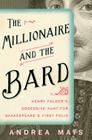
To publicize Andrea Mays's new book on Henry Folger and his obsession with collecting William Shakespeare's first folios (the first printing of one of his plays), NPR's Renee Montagne was able to visit the Folger Library in Washington, DC, and to touch (touch!) a few of the 82 of the surviving first folios.

One of the revelations which Andrea Mays's book highlights and again, in this interview piece, was that only about half of Shakespeare's plays had been published before his death and that if it hadn't been for this printed book (and why is this not considered having been published is a big question), the world after his death would not have known many of the plays which are quintessential Shakespeare (and quintessential English, in Lonnie Cain's perpective).

Let us take a moment to recall World Book Night USA, which had for three years been on 13 April, Shakespeare's birthdate.  The concept began in UK, where writers and publishers donated titles, printers donated paper and print time and readers donated time and nerve to walk up to light and non-readers to share the joy of reading a book. The not-for-profit effort closed down last year due to lack of funds.  We could have used some of Folger's.


21 February 2015

Baba Yaga - the Current Hot Paranormal

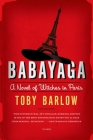
Have you noticed lately how many books are out with Baba Yaga as the protagonist?  First, you ask, who or what is Baba Yaga?  I leave it to Wikipedia to tell you all the skinny, but in short, she is a supernatural being from the Russian (or Slavic, per Wikipedia) tradition.  As with any folktale, there are conflicting as well as common elements: good/evil, old, ugly, child-eater/finder-of-lost-children, benefactor/help-of-last-resort, living in a hut in the forest which moves around on chicken feet/flying around in a mortar with a pestle as tiller, a single old woman/three sisters with the same name, etc.  And, there is some story involving an egg.  These elements are ripe for reinvention.

I have read recent books by three authors that do just that:


Toby Barlow's Babayaga: A Tale of Witches in Paris clearly establishes that there are more than one Baba Yaga and they can be young, old or very young, but that's all relative, because they live a very long time.  And, actually, they are taken in by a Baba Yaga before them and trained.  So, yes, there are more than one Baba Yaga, and sisters in fate if not blood. A twist here is the policeman who is turned into a flea, but perseveres in his job of investigating the bizarre death by impalement on a curved piece of wrought iron fencing.  The Baba Yaga of Barlow's interpretation are selfish, greedy women who love creature comforts and exploit mere humans, especially men, and will kill (or turn them into fleas) with no hesitation when they feel threatened by human curiosity.


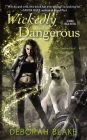
Another version of multiple Baba Yaga by Deborah Blake is also a witchy sisterhood of sorts, in which Baba Yaga is the honored title of magical do-gooders.  And because they can't do everything themselves, they're organized by region and they have dragons transformed into large talking dogs as wise sidekicks and bad bikers helping with the heavy lifting.  This is a romance series with the tagline "A Baba Yaga Novel," each title starting with "Wickedly" and about a different Baba Yaga -- Barbara Yager, Beka Yancy, ...


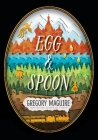
Gregory Maguire, of Wicked and Out of Oz, writes a more traditional version of Baba Yaga, from the point of view of a monk imprisoned in a tower who writes the story Scheherazade-like as daily letters to the Tsar to keep himself alive and maybe eventually released through his entertaining efforts.  We are not told when this story is, but we know that it's in Tsarist Russia when the court was in St Petersburg and there were trains powered by steam engines.  And, there's a Faberge egg.  Shall we say turn of the 20th century?  There's a Baba Yaga with many of the traditional elements -- an old woman suspiciously wanting a girl to drink borscht which is delicious as a marinade from the inside.

19 February 2015

Happy Year of the Ram, Sheep, Goat, Whatever!

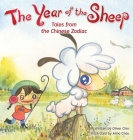
There's a big push, of course, to be politically correct, although why "goat" is more PC than "sheep" is a mystery to me (I  have long ago accepted that "boar" is  more acceptable than "pig," although that being the year in which I was born and got married, pigs are pretty special to me.  Probably for this reason, San Francisco author Oliver Chin's offering for this year is about showing how valuable a sheep can be in a storm.

This week remains "Golden Week" -- Valentine's Day, the 23rd anniversary of HopLeaf in Chicago, Mardi Gras, our wedding anniversary, Larry birthday, Presidents' Day and Chinese New Year!


14 February 2015

Second Saturday in February + Valentine's Day = Oh, What a Night!

Oh, What a Night! If you are not fortunate enough to have a reservation at Orom or Touch of Thai or with Cody Miller McGinn at Ginkgo Tree Cafe or with Margie Wildman at Baker Street for Valentine's Day evening, you can still venue-hop during Downtown Dixon's February 2015 Second Saturday, from The Next Picture Show, which opens its Regional Art Show tonight to Crystal Cork for a glass of wine (or a special martini mix) and a view of photography by Brian Lutz.  There are lots of other sites with artwork on display including the Main Street Dixon office.  A full list is with Sauk Valley Telegraph.  For full-fledged live music, come to Books on First where Hitz City is playing.  Hitz City, a full-fledged blues band, has been here in the past with Queen Bee singing.  Unfortunately, Queen Bee has departed this life, but fortunately, Hitz City is still thriving and wanted to be with our crowd.  So, come down 7-9pm for the incredible presence and sound of Hitz City.  And, right down the street, Rosbrook Studio, Dixon's own not-for-profit performing art cooperative, has open mic beginning at 8pm.  A little further on First Street, Val's has The Beaux playing 8:30pm - 12M.

A little further afield, Books on First fav Trinadora -- Ron Holm and Janne Nelson joins local poet Christine Swanberg for a Valentine's Day concert about all sorts of loving, at Rockford's Just Goods.

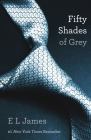
Is this going to be a "Galentine's" Day outing to see the newly released film, Fifty Shades of Grey?  Come in for a copy of this title along with the other two in the trilogy: Fifty Shades Darker and Fifty Shades Freed.


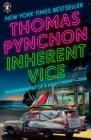
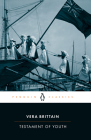
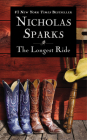
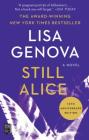
And, if you are interested in other titles made into movies coming out in 2015, we have them, also, like American Sniper, by (and about) Navy Seal Chris Kyle (whose killer has just pleaded not guilty for reasons of insanity), Inherent Vice by Thomas Pynchon, IndieNext Pick (2009) Still Alice by Lisa Genova, Testament of Youth -- a World War I memoir by Vera Brittain, or Nicholas Sparks's The Longest Ride.  The list can go on.  Check out Chapter 1's blog post and then, write us at chin@booksonfirst.com to reserve your copy.

30 November 2013

Reading Illness

I heard something on NPR this a.m. which would have floored me if I hadn't still been in bed.  I should have been up and about, but if I had been, I wouldn't have heard this piece on NPR's "Only a Game," and wouldn't have repeated it a couple times already before writing this rant online.  That's a conundrum.

Onward.  Well, the piece was about a four-year-old effort to bridge the gap between inner-city middle schoolers from Harlem, NYC, and small-town New Englanders with lacrosse.  First off, readers must understand that lacrosse is a big sport on the East Coast, but mostly in wealthier suburbs, exurbs and small towns.  It's like hockey in that way, although not so extreme.  Both lacrosse and hockey require equipment for each team member as well as a special gloves for the goalie (not to mention a net for the goal so that you'd know when the puck or the lacrosse ball actually scored).  Lacrosse is not so bad as it can be played on the same fields as soccer, so it just needs to jostle with soccer leagues for fieldtime.  Of course, in the communities in which lacrosse is more popular than soccer, that's hardly a problem.  Hockey is very popular in more places (for example, in Chicago, where adult men leagues start play at 11:30pm, because that's when they can get (and maybe afford) ice time).  I haven't seen many lacrosse matches happening in Lincoln Park along Lake Shore Drive.

So, teaching inner city children how to play lacrosse is a big deal, because one of the factors that holds the downtrodden down is not having the same childhood experiences as well as connections made on a sporting field (like lacrosse, golf, polo).  However, I must add that one has to do this sneakily. I had refused to learn golf in college, because I decided it was a bourgeois exercise, a decision I now regret.  Equipment which costs a pretty penny which poor school districts and families don't have does not make the sport very popular, either; if they did have a penny, they would prioritize to spend it on more important things like food, heat or mobile phones.

Anyway, one of the Massachusetts mothers who volunteers to pick these boys up in the middle of the night, drive them home, feed and house them, was happy to see the boys from Harlem really enjoying themselves, but there was one kid who was not joining in with the jocularity. 

“This one boy was sitting very quietly in a chair, reading a book. And I said, ‘Are you okay?’ And he said, ‘No, I’m just in the middle of a really great book.’
 And my daughter, who was 11 at the time, said, ‘Oh, my gosh, I’m reading the same book.’”

Thus did the hosts and the visitors begin learning they had more in common than enthusiasm for lacrosse.
What the ...????!!!!  Is there no one else who sees the problem in this?  Reading a book indicates a boy might not be feeling well?  It's a surprise that kids from urban New York might have something more in common with kids from exurban Massachusetts than merely lacrosse which was introduced by a New Englander?

The bridge which we need to build needs to be a lot longer and stronger than that made of lacrosse. 

09 November 2013

Is It Really About the Trees?

The Onion, not wanting to descend to using onion skin, is discontinuing its print edition from the final three markets in which it still existed.  NPR's write-up has it all about the trees.  Pfft!  Likely story. 

But, it will be sad, and interesting to note that Chicago was one of the last hold-outs.  When we or any customer could find it while in Chicago, we brought back a copy or two for the enjoyment of customers.  One said that he spent so little time reading news that he felt guilty reading fake news.  We had to persuade him that it was not news, but entertainment.

People like to read hardcopy print, and there will be all the more reason to buy a whole book when there weren't the individual editions to hang on to.  The Onion's latest book came out this year in paperback.  We hope it won't be the last

07 November 2013

And the Beat Goes On

So, last night, as I'm driving home, I hear the news on NPR: amazon.com wants to "share" with Indie booksellers -- 10% of any titles sold to that particular Kindle for up to two years after we sell it which we had to have purchased and stocked for resale from amazon.com at only 6% off the retail price.  Huh?

And how about all those wonderful readers whose loved ones have already given them a Kindle for a birthday or Father's Day or Christmas, because they thought this would be the best gift for a booklover (and they can still drink coffee and browse at Books on First while downloading the book from amazon.com)?

Hashtag nothing is free. 

We continue to thank you for your support and hope that you will realize that the time to save the whales is not when there's only one whale left.  And, that even if a feral dog stays with someone and eats out of that someone's hand for two years, it doesn't mean that the dog won't bite the hand that has fed him.  For a lousy 6% on devices (not to mention unreimbursed cost of shelf space and use of capital) and 10% on title downloads on those devices up to two years after sold by the bookseller (but not on any other Kindles as a customer may choose to designate), we are to be grateful the feral dog has come to our hand?

Let us know what you think.  Take the poll or write us at chin@booksonfirst.com.

REMEMBER, Saturday, 30 Nov is SHOP LOCAL DAY

03 November 2012

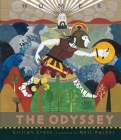
The ongoing discussion of electronic versus printed bound ("hardcopy") books continues today with an item on NPR's Morning Edition.  Today's specific discussion revolved around a very special book, a new edition of Homer's The Odyssey by Gillian Cross and Neil Packer.

Just as in my past posts here, the words and phrases of "tactile" and "work of art" and "book" as well as "ornament" and "marginalized" come up. 

24 June 2012

Woe Be Publishers, the Thunkheads. Woe Be Booksellers. Woe Be Readers of Books.

As you may know, United States Department of Justice is suing Apple and five large publishers for colluding to fix prices on e-books.  Three publishers have agreed to settle without admitting wrongdoing just to get the nightmare done and gone.  Apple, Penguin and Macmillan vow to fight on.  Those three -- Simon & Schuster, Hachette and HarperCollins are right and they are wrong.  They are doing the right thing in the short run for their shareholders to get out before drowning in the fight of their life with the DoJ.  However, the nightmare is not over and the fight for their lives may just be beginning.  Besides the news release on the DoJ's site, a good summary of what is happening, written by Michelle Maisto, appears in eWeek.com.  And, now the comment period for the proposed DoJ settlement with those three publishers will end on 25 June.

Apple can survive.  Amazon.com will thrive -- for awhile.  However, publishing as we know it had ended a long time ago.  Even when I reported here that American Bookseller Association representatives were trying to persuade us that electronic books were just another format like hardcovers and trade paperbacks, I knew that the end had come.  They -- publishers who initially agreed to amazon.com publishing on the Kindle format -- just didn't get it and now, the entire book world suffers.

Here's my comments:

John Read, Chief, Litigation III Section
Antitrust Division
US Department of Justice
450 5th Street, NW, Suite 4000
Washington, DC  20530
John.Read@usdoj.gov

Dear Mr Read:

We are writing with regards to the Department of Justice (“DoJ”)’s findings and proposed settlement with Simon & Schuster, Hachette and HarperCollins on the DoJ’s civil suit regarding the “agency model” of electronic book (“e-book”) pricing and the charge of collusion, price-fixing, anti-competitiveness and harming the public interest and consumers.
We write as an independent bookseller, not associated with Apple or iTunes and associated with amazon.com and the publishers as a resale customer.  We also write as representatives of the current and future reading public.

We do not know the intricacies of the applicable laws, but we do not doubt that the DoJ has seen some interpretation of the activities and facts to justify the complaint.

However, we take issue with two points that Attorney General Eric Holder had mentioned in the DoJ’s news release of 11 April 2012.
a)    That the DoJ’s efforts represent its “latest progress in protecting American consumers from anticompetitive harm, ensuring fairness in the marketplace, and making certain that cutting-edge technologies are available at the lowest possible price” and
b)    That the steps proposed in the settlement “are appropriate – and essential in ensuring a competitive marketplace.”

We respectfully submit the following suggestions to improve any settlement that might address the concerns of all parties – DoJ, publishers, readers who want to buy e-books, amazon.com and non-amazon.com retailers:
a)  Allow publishers to retain the right to set e-book release schedules and that e-books in all formats come out at the same time so that amazon.com and Kindle do not have an unfair advantage over non-Kindle resellers of e-books,
b)  Allow publishers to continue to set e-book list pricing on which amazon.com and everyone else can discount and the list price must be posted along with the discount or offered price, and ultimately,
c)  Require that amazon.com provide access for owners of Kindle devices to be able to purchase non-Kindle formatted e-books, download and read them on their Kindle devices.

To elaborate on these recommendations:

11 May 2012

The Backwards Evolution of a Book

This has happened before but I have not yet heard of such a dramatic incident of what can be called "backwards evolution of a book."

The hottest (in nearly all the figurative definitions of "hot") printed bound books selling right now are the Fifty Shades trilogy.  You just have to hear author E L James's talk with Jian Ghomeshi of Q Radio.  This whole story starts when James sees Twilight: The Movie which she loved loved loved.  She asked her husband for the printed bound books for Christmas.  She finished them in five days, inspired to write a novel.  The Twilight Series has been described to us by customers as "the most erotic reading with no sex involved."  Recall that these are young adult books and no sex in the writing is a good thing.  Being able to say that they are erotic reads is an incredible thing.  And, to be able to say that it inspired someone to write erotica (or an adult romance) is way cool.

The most fascinating facet of the whole situation is how the "books" evolved.  They started out being free downloads in a fan website.  The popularity stemmed from word-of-mouth (or text) individual promotion.  Then, there were two bidding wars, one for film rights and one to publish PRINTED BOUND COPIES of the books.  More than one person saw the value in printing and binding the books.  The fact that they are now bestsellers means that readers saw the value in having printed, bound books.  What does this mean?  No, it does not mean that we can have 50 million poorly written, unedited books flood the internet and still be able to keep from extinction that delicate creature called a bricks-n-mortar bookstore.  But, it's a thought.

Larry and I are waiting for the calfskin-bound, India-Ink-inscribed-by-monks-on-vellum set.

27 March 2012

Say It Ain't So, JK!

We were all so happy for JK Rowling's pottermore website, "we" being everyone who have always held the belief that whatever captures the imagination and desire to read is a good thing.  As printed bound books go the way of the dodo bird, pottermore promised to be the next Harry Potter fan's passion -- interaction, social media and eventually, digital download of the books.

And, now, that day has arrived.  Fans can download the Harry Potter books and carry them around on their Sony Reader, Nook or Kindle. As a deal had not been struck with Apple to sell through the iStore, "Apple device owners will be able to access the books through other retailer apps," says one report.  Hmm, what's missing?  Say it isn't, so, Ms Rohling, that you have left independent booksellers in the dust!  What happened to championing that little independent cafe around the corner where you sat (probably with one cup of tea) writing the first Harry Potter book?

And, what happened to IndieCommerce who have not been marketing our value?  Even if not as a Google e-book (but why not as a Google e-book?), we indies could have linked to pottermore as affiliates.  What will it take for people to think that we are able to sell ebooks?  Pass the word, will you, to anyone who will listen, but especially to authors like your favorites.