Featured Post, or Blast from the Past

And Father's Day Is STILL a Good Time to Buy a Book

Because Dad (and Gramps and Poppa) deserve the thought that counts    

Showing posts with label West Babylon NY. Show all posts

08 November 2016

Men Called Ove, Rune, even Albert Gislain


A Man Called Ove is one of Frederic Backman's earlier works. A New York Times (and IndieNext) bestseller, it has been made into a film.  Just like the book which is very Swedish yet accessible to us here in USA, the film is delightful and quite true to the book.

It is a story that has been told many times before, an old curmudgeon who has a backstory, a reason why he, as some would say, has a stick up his ass.  And, if you get to know him and know the why of it, he will become lovable to you. And, having it be a Swedish story makes it all so much more literary.
Everyone has a man called Ove living in the neighborhood. In West Babylon, where I grew up, we had Mr Gislain. He and Mrs Gislain lived with dog Spotty right next door to us.  He drove an old black Rambler sedan with no radio installed, no automatic transmission, no rust.  Before Mrs Gislain had her stroke, they would take care of Spotty together and they would take the car out for a drive on Sundays to Orient Point.  He still cared for this overweight pug and after she was unable to do so, paid me $2 for holding Spotty in the car while we drove to the vet/dog groomer and waiting through the appointment.  This was fairly often, if I recall correctly, at least monthly for the toenail clippings.

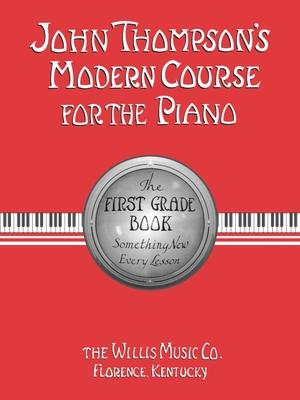
She taught piano, starting with John Thompson instructional books, for very little money and we had no pressure to perform in recitals like other children I have read/heard about. I hated piano lessons, but couldn't imagine a time without them. We had music sessions in elementary school, learning the staffs and notes in addition to singing songs, but without piano lessons, I wouldn't really be able to say I could read music.

Mr Gislain has an incredible backstory, but he never said anything about any hardships. As a young man, he played trumpet in a classical music orchestra. After symphony and other concerts with classical music, the musicians would pack up and covertly make their way to basement nightclubs where they would (like almost every musician I have ever known) delight in getting called up the stage or bandstand to join in. He told me that story after pointing out an old photograph framed and in a place of prominence on a lace-covered bookshelf.  It was a photo of an all-girl German jazz band.  He said they were terrific and he had played alongside the female trumpeter who in his opinion was very talented.  This kind of music was disreputable and any properly employed musician could not afford to be seen doing what he did, lest he be fired as a less-than-upstanding member of a serious orchestra.  Ah, the thrill of risking discovery!

After his lips gave out (his words, not mine, again, if I recall correctly), he ended up working at the sanitarium Pilgrim State Psychiatric Hospital.  I had heard this rumor and thought he was a doctor or medical personnel of some sort.  But, no, he corrected me; he was in Maintenance and had the great responsibility of making sure there was enough coal in the winter for heating the building(s?) of which he was in charge.

None of the neighborhood children thought him very lovable, or even nice.  He would yell at those who ran into his yard to retrieve errant balls.  He walked Spotty on a leash around the grounds like it was a park (and actually, it was a pretty big place -- 2 lots? 1.5 lots?).  He did not have air conditioning in the car or in the house and wondered aloud why we would not turn on our window unit in the dining room more often than we did.  We all knew that running the A/C was a costly use of electricity, and my parents generally allowed its use on very, very hot for dinner as the heat from cooking dissipated and we could later watch television and sleep on the carpeted living room floor which adjoined the dining room in an open floorplan.  When we had the A/C on, all the bedroom doors except our parents' were closed.  The bathroom door, also, was closed.  Going to the bathroom was a sweaty ordeal.  The parents' bedroom was considered the furthest away from the air conditioner.  And, inside, a fan was positioned to blow the warmer air out of the room.  Not sure of the logic of the circulation, but no one questioned their right to keep the door open when every other one was kept closed.

I think Mr Gislain did not buy an air conditioner so that he would not be tempted to turn it on at the least sign of hot and muggy weather, justifying the variable overhead cost as using his asset investment wisely.  So, best to stay away from that entirely.  I do not recall if they got one after his wife suffered her stroke.

Our neighbors called him an old busybody, because they felt sure he was watching all of us through the lace curtains and commenting later about the car we drove or visitors to the house or even whether the big tree (oak or plane or black cherry) should be trimmed lest it fall across the roof of the house during the next big storm.  However, my mother said she really appreciated his watchfulness, and felt the area was safer, because no strangers could come into the neighborhood without his knowing and letting us know, too.

Contradictorily, they called him "Mr Magoo," because he kind of looked like the cartoon character especially when he was behind the steering wheel of his Rambler.  If anyone recalls, the cartoon centered around an old man with very thick glasses and a Model T or Model A car, who ran is car into and onto roadside objects and pedestrians and mistook items and people for different items and people.  In short, Mr Magoo couldn't see.

There was even a "Parvaneh" of sorts for the Gislains.  I don't remember her name, but she was a flamboyant woman who was a singer, I believe.  She travelled into New York City often, probably for auditions and work.  She had decided she needed to learn to play the piano.  Her lessons were after mine on Saturday mornings, and she would come early and spend time with "Uncle Alberto."  She might also have been there at other times.  She was on such good terms with Mr Gislain that I truly thought she was a niece or grandniece, but Mr Gislain corrected me there, also.  It was just she, funning.

17 January 2016

Remembering Bowie and His Words


Did you know that "they" is 2015 Word of the Year, per American Dialect Society?  For all of us who know why, raise their hands. Yes!  It means that it is now totally accepted that everyone uses "they" when they don't know the gender of to whom they are referring.  Well, they say that change is the sign that a language still lives and English is indeed a living language.

In-progress Capture of David Bowie by Sydni Reuben in tribute to he they who died 20January2016


Heard this first on NPR/PRI's "The World" seguing into a tribute to the recently passed David Bowie, which in itself is a must-listen (hint: start at 12:28*), in which Patrick Cox who writes on language is reminded by "gender-neutral they" of David Bowie's early introduction of "gender-neutrality."  When he lived, David Bowie was constantly changing and constantly challenging our idea of what gender is.  Apparently, this idea of changing was something he picked up very easily as a "collector" of accents and personalities.  (I too pick up others' accents easily.  It used to be embarrassing in high school at the time when we had many Southerners hired as teachers, librarians, etc.  The person in a position of authority always thought I was making fun of him/her them.)  We think of him as a performer, but based on the interview with the BBC in the 2002, he considered himself as a writer.

*But if you want to start at the beginning of the podcast, you can learn about a Long Island tribe whose front gates we used to pass on Montauk Highway on our way to Sag Harbour, Montauk Point and other points east of West Babylon.

Just found an archived post on one of our blogs of note as well: Stan Carey's Sentence First: An Irishman's blog on the English language (yes, I love the name, too) from back in 2013.  Mr Carey has always argued that on the side of the living language.  He mentions something that I did not know -- that "you" at one point was strickly plural, also.  So, what was singular?  Perhaps when people started using "you" in the singular, there had been a firestorm of controversy, also.  The Japanese have a word for "you," -- anata -- which I was told by an instructor of the language that it is "too cold" to use.  I think she meant that using merely "anata" is impersonal, the impersonal you.  The Japanese much rather say, "Oku-san" or "Otoo-san," meaning "The Missus," or "Father," like we were in a Georgette Heyer novel or something from Medieval England, in which the characters are usually saying to their own parent or duke something like, "My father is surely impatient" or "His Grace would be advised to let things run its course," as if the man weren't even in the room, let alone being the partner in a discussion.  I imagine this was considered more respectful and polite than saying, "Can't you just wait a bit before disinheriting your son/issuing a warrant for his execution?"


When someone at Books on First yesterday heard me talk with another customer about the Word of
the Year, he asked if I am a grammarian.  I hesitate to identify myself as one; as I'm hardly one who knows all the rules.  I said that I am merely one who resists change.  He then proceeded to give me two test questions, neither of which I answer correctly (or at least according to his unconfirmed grammar style book).  I should have boned up on the Strunk & White, before subjecting myself to this questioning. 

Another customer in the store was visiting with his sister and showed off a gift from her.  It is a T-shirt with the words "I am silently correcting your grammar."  I nearly clapped my hands in delight, not so much for the thought, but for the coincidence.  You never know what a person might find at a bookstore, especially if they delight in serendipitous coincidences.

29 December 2015

Blackout!

Living in the country means needing to endure electrical power outages due to winter storms like no others. Having lived in cities and in suburbs, I can say this. The worst thing about a suburban home not getting electricity is not getting heat, because the pilot light on the oil heater is run on electricity. The worst thing about an urban apartment not getting electricity is having to listen to neighbors kvetch about how useless the City is (and remembering why, besides not being able to regulate the flame, getting a new electric stove & oven is not superior to the old tried and true one fueled by gas).


Being in the country is a little complicated when you must describe where you are using longitude and latitude.  This is not such a big deal for those who grew up around the area (nor, such a big deal anymore since GPS came into being -- but, hello, habitual dumb phone users here, remember?).  Exurban West Babylon girl like me knows all the neighborhood streets which are one block long and named after trees -- Woodbine, Maple, Spruce -- and ending at one direction onto South Railroad Avenue and at the other, Nill Street. Inexplicably, but not questioned, was why the main walkable street was named "Nill" and why the cross streets were not trees but wood -- Maplewood, Sprucewood, Cedarwood.  Woodbine escaped this fate perhaps because it is not a tree, but a bush.  Maybe the theme in the neighborhood was not "trees" but "wood."  This doesn't explain "Nill," which before I learned to read, I had thought was "Nail" from my mother's pronunciation, and then, thought must have been someone's name.  Curious to know now whether "Nill" had any other meaning than "nil," I naturally "looked it up."  Most dictionaries only had the definition of being an archaic form of "will not."  Can you imagine a tantrum-midst toddler screaming, "Nill! Nill! Nill!" instead of "No, I won't!"?  Wikidictionary came up with a second etymology.  "Nill" could come from the Gaelic "bright," to define the sparks off melted metal on a forge. If that is the origin of "Nill Street" amongst all this wood, a long-ago developer must have had a good laugh.

But, I digress. 

In fact, I don't believe Larry even knows the address of the place, but he does know the cross street (singular), and probably would say, we're on Twenty-six on the corner of McCoy Road, about five miles south of Thirty, just a mile north of the Green River. And, the operator at ComEd would have sighed and put him on hold in order to disconnect him inadvertently 15 minutes later if he had not already done so himself.

Now, if anyone is looking to rape and pillage our place while the power is out and we can see your flashlights waving around pretending to be ours, let me warn you that we have four (count them, FOUR) fierce guard cats, descended from lions to protect their (and incidentally our) domain.  They will lie in wait on the floor of all the main thoroughfares through the house, ready to trip you up.  And, you will trip on one, regardless of whether your light just shone on her or not.  Being less agile than she is, you will not be able to sidestep her as she will move in the exact altered direction as you do or even more diabolically, directly towards you. 

Last night, one of them (I dare not name her as she would sue me for lack of heroine anonymity or at least, privacy) was guarding a lit candle so closely that her fur caught afire.  No doubt if Larry had not acted hastily and put it out, she would have done a drop-n-roll before resuming her position and preventing a larger conflagration of the homestead.

(That's right; our home did not burn down last night, so her vigilance paid off.)

Fire is a hazard in all power outages involving candles, but moreso, when flowing water requires pumps which require electricity.  My long-time vote (even before I had a vote) had been to go geothermal like friends in Mount Carroll, but Larry was reluctant to dig up the front lawn (WTF?).  After the power outage due to tornado this summer, his idea was to see about installing a generator --  a really large, maybe gasoline- and battery-operated generator outside by the ComEd transformer feeding electricity through the same cables into the house (which is probably why utilities always say, our responsibility stops at the property line).  Not sure what all this would have entailed, but that idea got deep-sixed or at least put on ice (har! har! har!) in time for this bout.  And, although big supporters would say otherwise, either proposal wouldn't have been practical anywhere but out in the country.  So, that's looking on the bright side.


22 July 2014

Gimme the Jimmies

While catching up on a few chores this weekend, I heard a slice of NPR's "Wait, Wait, Don't Tell Me," the radio network's weekend quiz show with a panel of humorists, host and scorekeeper/announcer.  Usually based in Chicago, this weekend, the show was on the road to San Francisco, where a guest celebrity was Tom Keller of Napa Valley restaurant The French Laundry. When Keller came, he brought food for the panel and host, a little something that every guest to The French Laundry receives before his meal: the coronet of Atlantic salmon -- which to everyone looks like a tiny ice cream cone -- with (along with the salmon and cone-shaped cracker) creme fraiche, sweet red onions and little chive jimmies.

Jimmies!  Where I grew up in West Babylon on Long Island, NY, those miniature chocolate or multi-colored hard sugar pellets usually found atop ice cream, frosted cupcakes and cookies were called "sprinkles," as they were sprinkled on the dessert.  When I arrived at Vassar in Poughkeepsie and ventured out to the soda fountain at College Drug on Raymond Avenue where for an additional 25 cents, one can get jimmies on her ice cream cone.  When I first saw the word on the board, I intuitively knew what that word meant, what it represented, but still asked, because I thought I might be wrong, that jimmies were different and maybe something more special than mere sprinkles.  Well, yes and no, that word "jimmies" does not represent anything more special than "sprinkles," but the word itself, so homey, so fun, so cant.  This word "jimmies" is special.  From that moment on, what is sprinkled on ice cream are called "jimmies."  And obviously, what is sprinkled on coronets of Atlantic salmon too are called jimmies, be they chives and not chocolate.


10 August 2013

The Physiology of Physics

Did you hear about the study which basically said that the reason why there are so few women in tech jobs is... (drum roll, please) because there are so few women in tech jobs.  Lack of role models, that is.  It all started with the premise that there were not as many women in tech jobs, because they weren't taking the courses in school that were needed for such careers, like Physics.  Some researchers set out to find out whether that premise was true and if so, why.

Let me tell you, I can tell you that Mr Haines back at West Babylon HS would have been a good reason not to continue taking Physics beyond high school.  To this day, I remember concepts like equal force.  He would lean his hand against the wall and say that the wall was exerting the same amount of pressure on his hand as he was exerting on the wall.  And then, he said as he did a quick release and return, "I can even fake it out.  If the wall did not always exert exactly the same pressure that I'm exerting, it would have fallen on me."

So, yes, he was a good Physics teacher, but he knew he was teaching to Physics-phobic teenagers,  apathetic and pathetic idiots.  He had been a Marine (my late brother-in-law used to say there are no ex-Marines, but then, would go on to say, "...except for... and ...") and he scared me with his barking denigrations and sneering disdain.  He had called a classmate whose last name is Boxmann, "Boxboy."  He slid the chalk down the greenboard at such an angle to emit a long screech to witness girls cover their ears and screech in response. He would look at us slyly sideways with a smile and say that women belong at home, barefoot and doing laundry on a stone by the river.  He scoffed at kids' delight in popping bubble wrap, saying, "Yes, the experiment is a success.  Cause the same event and effect the same result.  Press down on the plastic bubble and hear it go, 'pop!'."

I knew I didn't have the smarts nor the passion for science, and he confirmed that.  And, you would think with such a recommendation that he would be a sexist jerk, but he readily acknowledged proudly that his best student ever had been a girl named Pat (Sorry, Pat, back then, I thought I would remember your name for all time but now can't recall your surname.  If I had waited to write this a few years from now, you would be reduced to a girl whose name started with a "P".)  I had hoped that he was role model enough for her to be inspired to continue taking Physics in college and become a "woman in a tech job."

08 December 2012

Tragedy Strikes and West Babylon Is In Our Consciousness Again

Regular readers of these blogposts may recall that Books on First proprietor Carolyn Chin yours truly hails from West Babylon, NY.  I don't believe I've been there in 15 years or more.  All throughout my time there, we were able to say (proudly, derisively, matter-of-factly) that Geraldo Rivera, known in WB as Jerry Rivers before becoming ethnic to gain media tractability (I think it's called doing what would get him a higher "TVQ") was from West Babylon.  An English teacher of mine used to say, "Oh, yeah, I went to school with Jerry Rivers.  His parents still live here."

WB had had some more notoriety:  Jessica Hahn, the secretary to televangelist Jim Bakker, retreated to her parents' stoop in West Babylon to address reporters who had followed her there after the hush-money-for-sexual-encounter with Bakker and another minister came unhushed as uses for funds coming into the PTL (Praise the Lord) Church were being investigated.

And, just like people here in Dixon and environs are proud to say that Sean Considine who has now been on various National Football League teams in the few years he has played professionally is from Byron, IL, a scant 25-30 miles away, I am sure people in West Babylon and environs, too, had reveled in the fact that Jovan Belcher, an NFL player, most recently with the Kansas City Chiefs was from WB and his mother still lives there.  On 1 December 2012, after a night of arguments, going to separately going to a favorite nightclub with different companions, Belcher killed his girlfriend and then, himself, orphaning their 2-month old daughter Zoey.  Chances are, Zoey will be going home with Belcher's mother to West Babylon.

P.S.  By sheer good luck, the 2013 Chicago Bears calendar has a bonus: the cover photo is of Philadelphia Eagle Sean Considine chasing a Bear.  So, whether you're a Sean Considine fan, a Bears fan or not a Bears fan, Books on First has the calendar for you.

08 March 2012

First Cut for Independent Foreign Fiction (Translated into English) Prize 2012 Out


From Beattie's Book Blog of New Zealand comes the whole "Long List" plus commentary.  In most if not all situations, the choice of translator is almost as crucial as the book written in its original language.  So often we must rely on these translations to see what the author wants us to read, experience and understand.  If you have ever tried to translate something from one language into another, you would understand the difficulty of achieving just the right tone and meaning, and the pride of accomplishment when you think you've "got" it.  A childhood friend of mine from West Babylon, NY, now living in Austin, TX, who studied many languages and works as a translator, has translated for opera, which I think is amazing.  We are talking not simply capturing the cadence of an author/lyricist but also, the rhythm and flow of the composer's music.  Translators of poetry also have a special responsibility.  Hats off to all the authors and the translators thus far honored.

Books on First has several of these available (I believe the hardcover $30.50 1Q84 by Haruki Murakami and principally translated by Jay Rubin, Harvard Professor of Japanese Literature, contains the entire story published in three parts in Japan) will soon have others, like Dream of Ding Village and the trade paperback version of Please Look After of Mom (of course, in the slacker USA, it's "Mom" instead of "Mother.").

10 January 2012

Hail to the New Ambassador for Youth Reading

Walter Dean Myers is best known for his harsh, urban grit writing for young adults, touching on the pressure of gangs, the plight of broken families, the grimness of poverty and lack of legitimate opportunity, the horror of prison, and the loneliness of being different.  He will be our next Ambassador for Young People's Literature, a position which was created in 2008 and is chosen by a committee formed by two groups: the Center for the Book in the Library of Congress and Every Child a Reader, a nonprofit organization affiliated with the Children’s Book Council, a trade association for children’s book publishers.  It was first held -- and thus defined and pioneered by Jon Scieszka, a young children's author best known for Trucktown and then, by Katherine Paterson, best known for Bridge to Terabithia.  He is championing early reading advocacy by parents and other family members, citing his mother's love of true romance magazines.  As a baby, he listened and watched his mother with finger on the page, slowly but surely reading aloud to him.  By four, says Myers, he could read to her as she ironed clothes.  Sigh!  What a story

Growing up in my household, my older sister and I were obsessed with reading, to the detriment of doing more useful tasks, like setting and clearing the dining table.  To be able to go to the Village of Babylon Public Library was a treat.  I loved visiting my maternal grandparents' apartment, because my three aunts (some fourteen to sixteen years younger than my mother and thus, only a decade or so older than I) had left books galore on the shelves, including Jacqueline Susann's Valley of the Dolls, from which I learned at a tender age all about show business, pill popping, sex, mental retardation which does not preclude a singing career or need for sex and breast cancer, and Edith Hamilton's Mythology, from which I gained major knowledge about the Greek and Roman gods.  From the West Babylon High School library, I signed out anything and everything, discovering the OSS, Wendell Willkie and Phillip K Dick.  I also translated what I saw on screen to sought-after reading material.  Just like today's movie goer looking to read Harry Potter or Suzanne Collins's Hunger Games, I wanted to know where my favorite movie (which I saw on television) Guys and Dolls came from, which is how I discovered Damon Runyon. 

My world has narrowed somewhat as I am not as patient with writers or unhappy endings as I once was.  Anyone can take credit for my love of Georgette Heyer, especially my first -- Frederica, since I can't seem to remember when I first happened upon this great English Regency-era writer, from whom all of today's romance writers owe much.  All in all, I applaud the appointment of Myers (as I applaud the position of "Ambassador for Young Adult Literature") and wish him every good fortune in continuing the work of getting more people to read.

22 October 2011

Blinded Me with Science

When I picked up Robin Brande's Fat Cat to read, I had forgotten that she had written another Young Adult book which I had liked and had previously recommended somewhere, Evolution, Me & Other Freaks of Nature, a well-done commentary on the unforgiving interpretation of What Is Right.  The story unwinds tensely around Mena and the reader can feel the almost palpable heat of innocent hatred of the "Christian" kids for all things Wrong -- homosexuality, evolution and anyone defending such abominations or simply standing up to the righteous.  Mena and her family are basically shunned by the community they had always thought were an extended family.  She begins to learn about the world outside fundamental Christianity and even a little bit about the world inside.  She even has enough curiosity and courage to ask her teacher how one can believe in God and the theory of evolution at the same time --  a question with which Charles Darwin himself struggled when scientifically developing the theory.  That makes Evolution, Me & Other Freaks of Nature a much more serious or perhaps "heavier" in weight of social issue than Fat Cat

Fat Cat addresses the issue of obesity and popularity, except they're not issues in this book. Catherine is a little fat, but not obese and while she's obviously not in the most exclusive clique, she is neither yearning to be popular nor is she being taunted for being fat.  Nor does it appear she or any Honors classmates are being taunted for being geeks.  This story is an evolution of a different sort.  In a Science Fair experiment which first begins as what happens when Cat chooses to eat and live like early hominids -- no cars or cellphones unless in an emergency, no processed foods (like chocolate!) or even dairy (there were no domesticated animals that long ago and so, no milk), and no hair product, Cat is motivated to win first place primarily in order to beat a former friend Matt McKinney, whom she has had a rivalry for as long as she could remember.  It used to be a friendly rivalry, which turned bitter -- at least on her side when they were thirteen, some 3-1/2 years ago.  As the narrative is told in Cat's viewpoint, the reader is just as clueless as Matt as to why they are no longer friends.  Did he throw the Science Fair competition and let her win?  Did she overhear him telling lewd jokes about her?  Eating healthy and walking to school and work have the added benefit of Cat's losing weight and gaining toned muscles.  She goes from "Fat Cat" to "Hot Cat" and attracts way more male attention than she ever dreamed of or even wants.  The experiment morphs into how would a Homo Erectus choose a mate, and is that any different today than it would have been then?  Along the way, Cat learns as much about the self she becomes as she does her pre-historic model.  And in the end, when the judges ask, "Do you think this project has changed you?  Beyond the obvious physical changes?," she can smile and say, "You have no idea how much." 

It's great that Brande is able to depict science in such an accessible way.  While I never knew any such intelligent and creative high schoolers so into science (no Science Fairs in West Babylon and I was in the honors program!), I can see how they would exist and how they're really just like ordinary teens with the usual teen angst.  Brande is an observant recorder of young adult nature, a trait which itself is a pre-requisite to a good scientist.  I'd like to think that the 21st Century Teen would enjoy Brande's writing as much as a middle-aged bookseller, but maybe I'm just blinded by the science.

23 August 2011

It's Time to Go Back to School

Amazing but true.  We move from planting gardens, attending graduations and celebrating Memorial Day to attending more graduations as well as weddings and celebrating Independence Day to packing college-aged offspring (and grandchildren) off to college and getting panicked about those assigned summer reading lists and knowing that Labor Day on the first Monday of September will signal the end of summer.

I recall the summer before my senior year at West Babylon High School when I anticipated being in the advanced level English class.  The summer reading list was long and I mistakenly thought I should start with the first one.  It took me all summer, because it was not the kind of beach reading I normally enjoyed -- Moby Dick, or The Whale by Herman Melville.  I kept reading, "Call me Ishmael" over and over again.

The types of titles that are read today are different yet the same.  The list, what a teacher or a program has deemed necessary for a well-educated high school student, is never all-inclusive and always controversial.  Julia Keller had one say recently in The Chicago Tribune, including a dismissal of Rabbit, Run and a recommendation of Illinoisan William Maxwell's So, Long, See You Tomorrow.  I was never required to read Rabbit, Run in high school.  In fact, when the English Honor Society had its annual bookfair and I, (as member) while helping to take books out of boxes and put them on display, had placed that John Updike title (with an illustration of a rabbit on the cover, no less -- I swear) in the Animal section.  Our faculty adviser just shook his head in dumbfounded dismay.  What did I know; I had never read the book.  Should I have read that book?  It obviously was considered a title fit for highschoolers if it was in Scholastic's book fair selection. 

Now, we here at Books on First have some great back-to-school offerings for would-be readers of all ages.   So, between cramming in Much Ado About Nothing (my favorite Shakespearean comedy) and The Color of Water (or even The Great Gatsby), check out these fun titles:


09 January 2011

Books for the Month


In time for Martin Luther King Day (17 January), we have several titles, including The Everything Martin Luther King, Jr Book.  Back in West Babylon, MLK Day (which was not a federal holiday then) was a big deal.  Classes spent weeks developing skits, practicing songs like "Go Down, Moses (Let My People Go)" and "We Shall Overcome," and putting together a multimedia presentation, which in my day was  considered pretty cool if you could get some film, some audio overlay and a light show together.


Additionally, Dixon being Ronald Reagan’s boyhood hometown, Books on First naturally specializes in all books Ronald Reagan, so rely on us to help celebrate the 100th anniversary of his birthday (6 February).


Meanwhile, we are cleaning up inventory (something I wish we would do during the summer, but hey, I only physically show up one day a week). We have a lot of books to blow out of here. We must have 20 copies of the Dover edition of Shakespeare's Four Great Tragedies: Hamlet, Macbeth, Othello & Romeo and Juliet.  The title was special ordered by a teacher probably two years ago, and then, there was some snafu -- miscommunications about how many or which title or whether they were ordered at all.  The books were never returned (as that's not usually the best option) and Larry worked to sell them to another English teacher.  So, here we are, selling them for 60% off.  They would make great party favors (I am not jesting -- too bad this title does not include Julius Caesar, or else, I could suggest you have an Ides of March party and give them out.  Maybe you still can have an Ides of March party (or an Ides of January (which would be perfectly timed on Sunday, 15 January) or Ides of February party, and still give these out). 

At $2 a copy, it would be less expensive and much tidier to buy them all if you're planning to produce one of these plays in your basement or backyard (or local school auditorium) than to take one copy and make mimeographed copies (ha!  how many of you readers are old enough to remember mimeographs?  There were probably teacher's pets vying to run the mimeograph machine simply to get high on the chemicals emitted). 

No, seriously, folks, buying a printed bound book with four Shakespeare plays at 50 cents a piece (plus only 6.75% sales tax) is more than a bargain; it's a steal. 

Atop this, there are plenty of other titles for $1, $2 or 50% off list.  Check 'em out!

06 November 2010

Yes, We Have No Bananas Today

A recent WSJonline video about vending machines going "fresh" prompts two thoughts:
a)  One size might fit all, but one taste does not.  There is compromise, consolidation, substitution, but for bananas...there's not much accounting for taste.  I like my bananas not-quite-ripe, still green around the edges on the outside and firm with a not-too-sweet, nutty-tasting flesh on the inside.  The bananas for vending in the video looked perfect.  How would they look 8 days later?  They then would be perfect for a friend of mine who declared, "The browner the better."  Maybe they should have two rows or even three rows of bananas, so that consumers would have a choice in relative ripeness, while the vendor could come and move the product over to the next row as it ripens. 
They can label and sell the ripest ones as "baking bananas," as everyone who bakes knows that really, really brown bananas make the really, really good banana bread.
(Witness: Jennifer Crusie's latest (and really, really good romance read)  Maybe This Time.)  I will not give away anything about this book, except a lesson learned at age 9 is that again, really, really brown bananas make the really, really good banana bread.  I am puzzled why there were actually people who went to their graves (or stuck around as a ghost) without knowing this common fact.  People frequently tell me that I only believe some things are easy, because I know more than most people.  I am usually skeptical and this is one of those incidences.  That a nine-year-old doesn't know, I can understand, but it seemed like an awful lot of adults hadn't known until Andromeda ("Andie") Miller came into their lives to make the best banana bread they had ever had.

b) I am also reminded of Kroch's & Brentano's, Booksellers.  There was one at the mall when I was growing up on Long Island, NY.  (Please note, while I usually detest people using "Long Island, NY," as if Long Island were a town and not either physically a 100-mile long island or politically, two counties cheek-and-jowl full of towns, it's a lot easier in this case than explaining where I lived (West Babylon) and where (Smithhaven, South Shore, Walt Whitman, etc, etc) malls were.)  Kroch's was always considered a higher class (read: more expensive) bookstore.  We also had paperback booksmith in the same mall, and if I recall correctly, a Waldenbooks.  Can you imagine having three bookstores within a few hundred yards of each other?  Ahh, that was the concept of a mall at its best.

I had not known that Kroch's was from Chicago until I relocated here and talked with persons from this area who proudly proclaimed the fact, although that did not keep it in business.  The company closed in 1995, but in the decade before then, its employees tried desperately to keep the business going.  I remember walking down Wabash in Chicago and seeing the big windows of its flagship store covered with signs, "Yes, we have bananas today,"  a catchy promo to contradict the song, but perhaps there was some other backstory that an outsider such as myself would not know.  Of course, it meant that a customer received a free banana with book purchase.  Hey, anything (within reason) for a sale.

Speaking of Waldenbooks, we are missing ours in Sterling, basically the neighboring town from Dixon.  We were all very civilized, referring people to each other if we thought the other bookseller might have the needed title.  We even called one another for the potential customer, so that the books would be there waiting upon the potential customer's trekking the ten miles between stores.  We managed to start the ball rolling on a signing by Maury Possley and Rick Kogan when their collaborative effort, Everybody Pays, came out in paperback.  They managed to hit Dixon, Sterling and Princeton.  Hearsay, the Sterling branch was one of the company's better ones -- financially and operationally, but all of them closed nearly a year ago come end of January.