Featured Post, or Blast from the Past

And Father's Day Is STILL a Good Time to Buy a Book

Because Dad (and Gramps and Poppa) deserve the thought that counts    

Showing posts with label NPR. Show all posts

29 September 2019

From On Being on NPR, Sunday, 29Sep (also on onbeing.org 26Sep)
Ms. Tippett:
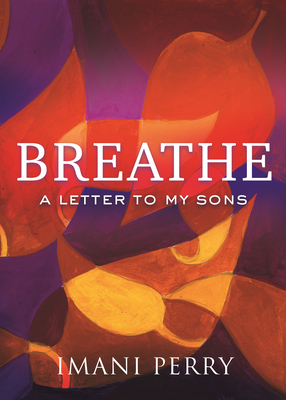
And that is, for each and every one of us, interior work as much as it is work that we do in concert and in conversation and in shared life.Ms. Perry:That’s right. And it’s why — I love all forms of art, but there’s something very special about reading, because you are entering into a world with other human beings, but it’s very interior. There’s something very intimate about it, and so there’s this — it’s why I’m a writer. There’s a possibility to get to that.
To engage is another reason why we must read and fight for freedom of expression.


05 December 2018

National Day of Mourning

Today is National Mourning Day for George Herbert Walker Bush, 41st President of the United States of America, who died Friday, 30 November 2018.

There is a lot of talk about George H.W. Bush's legacy as a public servant. He was certainly versatile: fighter pilot, head of the CIA, Ambassador to the United Nations, Ambassador to People's Republic of China, Vice President, before becoming President.  I believe hearing once when he finished as President, he had 5 pension checks besides Social Security or maybe including Social Security.  It was said that winning that election was important, as he had never been elected on his own to public office before.

I recall when Reagan was elected President, I and Kathryn Bing-You who lived just down the hall, hosted an End of the World Party.  The next year, I was in Beijing and had hoped to go to a reception in which Vice President Bush was doing a homecoming of sorts, visiting China where he had been Ambassador not too many years previous.  The connection I had -- a fellow American student at Beijing Language Institute (now Beijing Language College) preferred to spend the time in her connection's (some guy who worked at the embassy) apartment taking a bath.

He was considered to be more of a foreign policy President and lost the bid for a second term due to breaking the "Read My Lips; No New Taxes" promise from the first campaign.  I personally do not agree that this promise was broken. There were no new taxes. He simply agreed to a budget that involved increases in the rates of existing taxes.

28 August 2018

How Can You Stand It?


Unless you have had your head in the sand or you, Dear Reader, are from another country who does not care about what President Trump says, you would know that there has been hoopla for awhile regarding kneeling during the playing of the National Anthem at the start of professional American football games.  This was started by former San Francisco 49ers quarterback Colin Kaepernick,  triggering a firestorm in 2016 when he decided to kneel during the national anthem to protest racial injustice.

The first question to ask, of course, is when did we start standing for the playing of the "Star-Spangled Banner," which hadn't even become our national anthem until the 20th century (and that designation is still in dispute -- recall singing, "America" on elementary school mornings, considering "America the Beautiful" as a kind of change-of-pace national anthem, and hearing Kate Smith and her rendition of "God Bless America" coming from somewhere near her large intestine starting NHL professional hockey games in my lifetime)?

Of course, since we now have the internet, research has become so much easier to do, if not as definitive and perhaps lacking in authoritative veracity.  So, I "googled" the question, which resulted in two interesting items: One is from Digital Polarization Initiative (DigiPo), which, coincidentally talk about research ..., is an interesting project for students to "investigate questions of truth and authority on the web and publish their results."  I like how there are snipits of primary sources, like from the New York Times in 1918 as well as a reaching out to the NFL for confirmation.  Check it out.

The DigiPo article tells us through quoting a 1917 biography of Senator Julius C Burrows that the first time standing for the "Star-Spangled Banner" was at a West Point graduation in 1891 after being "implored" to do so by the Senator Burrows in his speech for everyone -- soldier or citizen -- to stand for the "National air."  At the end of the DigiPo article, an NFL spokesman had confirmed that the National Football League began the "practice" of standing for the playing of the "Star Spangled Banner" in 2009.  2009 -- less than a decade ago.  

Personally, (I don't know when, but) I began standing for the National Anthem -- any national anthem -- when I hear it being played.  I get quite annoyed when an item on NPR starts playing a snippet of "Star Spangled Banner" or some other country's national anthem when I least expect it and when I am driving in a car.  I end up having to turn the radio off, so I don't hear the music/song, pretending it's not being played so I don't have to stand up in the car for a few seconds and cause an accident.  I hear it sometimes half awake while listening to NPR in the morning and then, I have to roll out of bed (literally) and land on my feet to stand up, sometimes giving myself a charleyhorse.  Thankfully, a recent item on NPR played only a few ending bars of "Star Spangled Banner" before launching into how fans felt about the players kneeling and the League's decision to impose a rule stating that players must be present and standing on the sidelines when the anthem plays. I was able to pretend I wasn't awake for the playing of the anthem. Yay, for black military vet fan Perry Bellinger who acknowledges the players' right to protest and stands still when he hears the anthem playing, including in the parking lot of the football stadium where he could hear the "Star Spangled Banner" playing.  He criticized all those "patriotic" hypocrites in the parking lot, late for the game, who did not stand still, and I raise that point, too.  He didn't mention whether they had their fingers intheir ears, but maybe they were, in order not to hear the National Anthem playing, so they could pretend and not stand up, stand still, whatever one does to show honor to a flag.

To a flag, people, not even showing honor and loyalty to a concept or a country, but to a consumable (meaning perishable, not permanent) symbol of our Constitution and our great traditions of freedom, democracy, equal representation and justice.  Look at our President Trump, tweeting about how "unpatriotic" these protestors are when he is the one ignoring the Constitution, putting himself above the law and probably making all of our forefathers spin in their graves.


None of this is new -- the injustice, the protest, the not-standing for the "Star Spangled Banner."  And, maybe that's the sorrow of it.  How can we tolerate this?


26 May 2018

How True Does the Rising Tide Raise All Boats?

There are still too many who deny the science of global warming. Actually, the true controversy is whether humans have anything to do with it. Be that as it may, it's happening now. And, as God (or climate) giveth, so God taketh away.  There are larks flying around and larkspur blooming in Alaska as the snow leaves sooner in the springtime and comes back later in the winter. There are islands in the Pacific Ocean disappearing as it rises.  The Peruvian Andes are warming up to Irish potato blight while the villages high in Himalayan India begin to grow organic potatoes in land that has never had any crops before, where knee-deep snowfalls are history now, as reported on NPR, among other news outlets which some may call "fake."

And, so what do we do with those who are losing their homes, their livelihoods, and ultimately, their sense of community?  It's a conundrum, which some look to solve while others look away. Readers can get two perspectives, one non-fiction and one which could be in the year 2140.  Of the two, Kim Stanley Robinson's might actually be more difficult to read.  The speculative fiction (we don't have to call it "science" if you don't want us to!) presents a world recuperating from chaos, individual resilience and neighborly resourcefulness amidst timeless political & special interests maneuvering, divide between privilege & deprivation and lack of documentation versus the definition of belonging.


11 December 2017

Your Face Looks Really Familiar, or The Brain Is Still Good for Something

Heard on NPR recently about the difficulty in replicating the human brain's nuanced facial recognition abilities.  It is a perfect segue into introducing a great new book I have read.

First novel by Annalee Newitz, Autonomous, demonstrates again how "science fiction" is the genre in which to write to address current societal problems and timeless conundrums of the human condition while showcasing an imagination and projection into the future not expressed or maybe not even possessed by politicians, scientists, economists, philosophers or writers in strictly other genres.  I say "strictly," because "current societal problems and timeless conundrums of the human condition" include love or desire between mixed "breeds," economic and thought independence, dystopia, oppression of the masses by the elite few, cost of health care and the gig economy, all of which can be and may be addressed through a romance, a historical novel, a "chick-lit," a dark dystopian tale..., but are not done so in quite the way a science fiction novel can.  I have also discovered (and I did not know why I did not know this) that science fiction is also know as "speculative fiction,"

This story is Earth in July 2144, with some flashbacks to 2114.  This of course is a differently imagined Earth from today, but imagined from a projected trajectory (new word! "projectory") from today to what might life be after self-driving trucks and solar farms become commonplace, when Big Pharma becomes Even Bigger Pharma and leans on official governmental drug enforcement agencies to go after pirates and those wanting to provide drugs to those in need but without the means to afford them, and after the work of robots become as valuable or more valuable than humans', but the robot wants to become free like a human.  The obvious "equalizer" would be that the same kinds of long-term servitude contracts could apply to both robots and humans, giving a whole new meaning to "freedom" and "the disenfranchised."  Into this world, Annalee Newitz introduces characters we can care about: "Jack" Chen, a once-idealistic and talented young scientist turned reverse-engineering drug pirate; Paladin, a new combat robot to partner with Eliasz, a veteran undercover agent of the International Property Coalition (a kind of DEA - Drug Enforcement Agency to hunt down illegal drugs, but apparently, "illegal" meaning pirated patents, not merely heroin or crack cocaine), and a human servant whose name is a code and whose near-expiration long-term contract time resets after it is sold out of his employer's bankruptcy.  Paladin is a bio-bot, marketed as being even better than an ordinary robot, because it has a human brain in its core. The brain is the legacy by dying human as a paid donation to the advancement of science.  Most non-techies think that this human brain, housed in the biobot's mid-section, is the "brain" of the bio-bot, that if this brain were to be destroyed, the robot would simply stop processing -- stop moving, stop attacking, stop protecting.  However, that is not true.  Destroying the human brain inside would "merely" stop the bio-bot from doing the one thing that they have yet to engineer out of hardware.  This "wetware" enables robots to distinguish human facial expressions.  Author Newitz does not see human technology enabling us by 2144 to allow robots to go beyond facial recognition (which is hard enough) to understanding facial expressions and the emotions which they accompany.

Another human conundrum which this book addresses is "homophobia."  Apparently, 2144 is not far enough into the future to free humans from the shame/guilt/shunning of homosexual tendencies within themselves and of what others might think of them.  Eliasz is ashamed not of having feelings for a robot but for a possible male robot, while Paladin and its fellow bots shake their heads at this human failing to see that they have no gender at all.  It's only when he finds out that the human whose brain Paladin inherited was a woman that Eliasz is comfortable with more-than-platonic interaction with Paladin, continuing to assign something human to this brain in the bio-bot.

 It's a simultaneously sad and hopeful read of familiar situations in a futuristic setting.  Check it out!

28 September 2017

All the News That's Fit to Fake, Or, Conservatives Are More Profitable

Two influential people were reported by NPR dead today, Hugh Hefner and Paul Horner.  Hugh and who? I confess that I had not been following the fake news leads as closely, either. Many of them came from Paul Horner and his website "National Report," who had creatively alleged that protesters against Donald Trump were paid and even put up a fake Craigslist ad to back his story up. His object was two-fold, to "educate" people and to make about $10,000/mo on Google ads on the website. Such business acumen has unintended consequences. He regretted being instrumental in getting Trump elected.
"I hate Trump," he said. But he targeted conservatives with his stories because he found it was more profitable....
"I mean that's how this always works: Someone posts something I write, then they find out it's false, then they look like idiots," he told the Post. "But Trump supporters — they just keep running with it! They never fact-check anything! Now he's in the White House. Looking back, instead of hurting the campaign, I think I helped it."  

We have long known that being liberal is a losing proposition.  It costs money to have a social net and requires sacrifice to be "fair" and "equitable." And, most social liberals like me don't have time to troll strangers' websites and pass along news -- fake or otherwise or become one of the thousands which help make something go viral, probably because we don't have time to fact-check. Liberals are either too shrill or too shy and don't have the social skills or temperament to host talk shows meant to present only one side or debates in which the inevitable conservative view trumps (pun intended?). Even those really shrill ultra-conservative radio talk shows were hosted by people who may not have had such extreme views but knew on which side their bread was buttered and also pragmatically know (unlike the staunch liberals with honorable values) that it doesn't matter whether you eat the slice right-side up or not, you still get both the bread and the butter. Staunch liberals with honorable values would rather not eat the bread, even if they can't see the butter on the other side of it.

R.I.P. Paul Horner, but I doubt it'll be the end of fake news.

01 September 2017

I Loathe You, Yeah, Yeah, Yeah! Part II

And the beat goes on. (I know, mixed artists, but still in theme!)
I can barely listen the news or any talk anymore -- on NPR, even. Reporters, professors, government officials,... all starting their responses with "Yeah, ..." I can't listen to coverage on Harvey over Houston without getting overdosed on "Yeah, yeah, yeah." WHY? This is yet another breakdown of the American language and culture. Our vocabulary shrinks daily. I do not exaggerate. Why not use, "Yes," or "Correct," or "That's right," instead. Or, if it's just a filler so you don't sound inarticulate (oh, but you do), why not "mhm" or not put in fillers?
Once in awhile, I do get relief.  Someone will say, "Absolutely" or "Ja." (Or, is that "yeah" being shortened, like "OK" (military for "all clear) being shortened to "K" in speech and text messages. And, last night, I did hear someone say, "Correct," which made me resolve to write this blog entry just to thank the man.  Thank you, someone from the Silencio Band (I think it was the pianist) heard on Echoes with John Dileberto for bringing me back from the edge.

17 May 2017

Do Americans Get Their Milk Drinking Lattes?

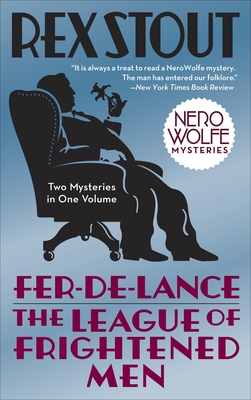
Heard on NPR: Americans are drinking 40% less cow's milk today than 40 years ago.  The average person drinks about 18 gallons/year and Archie Goodwin must have been drinking enough for about 10 of them.  For the Midwestern man's man then, suave ladies' man in his 30's, a cold glass of milk has been his go-to drink from the first Nero Wolfe book Fer-de-Lance, published in 1932.  There is no embarrassment on his part and actually, no heckling on the part of companions.  Of course, he also takes a shot of rye more often than not and has coffee at the end of breakfast to finish the morning paper.  But still, with breakfast along with lunch, dinner, snack, offerings to visitors as well as a pitcherful to take up to bed, milk (implied cow's milk) was Archie's drink of choice.

And now what do we have? Soy "milk." Almond "milk." Rice "milk."  As dairy producers complain, these are all named this way to give people a non-dairy choice while thinking they're still drinking milk.  Do Americans really think there's a machine squeezing almonds to get milk?  "Almond slurry," I agree, is much more to the point.  Producers of these non-dairy liquid products can always use the generic word "drink," which when used to describe a fruit-like orangey liquid evokes a factory making something which is 0.000001 part citrus, 2 parts sugar and 97.999999 parts water.  Almond "drink" doesn't sound far from that, especially since almost all of these -- soy, almond, rice, ... have added sugar.  That's what dairy milk is missing.  With the bans on "sugary drinks" becoming more fashionable, cow's milk with never added sugar may become popular again.  After all, can Americans really have their milk and drink it, too?

24 April 2017

There Are Rainbows Everywhere (or, Trout Fishing in America)

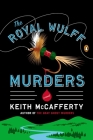
While on vacation to the Pacific Northwest recently, I read a couple of books by Keith McCafferty (doing our April Reading Challenge -- starting a new series!). His series is about a New Englander who enjoys trout fishing and with no direction after his divorce, he drove himself and his worldly possessions out to Montana to fish.  The titles of the books in the series are all names of tied flies.  If you are a serious fly fisher, you tie your own flies as well as know the history of fly-tying, heard of where all the best trout fishing is around the world and basically throw back everything you catch.


And, you would know that it's possible to cut a notch into the adipose fin without hurting the fish or its ability to survive.  You might know this little fact before or after visiting the Bonneville Dam before or after reading The Royal Wulff Murders.  By reading this first title in the series, you will also learn more than you may ever want to know about whirling disease and how it might spread to trouts in other waters far, far away, or how a real trout fishing aficionado might want to find, breed and populate the rivers with a super-trout.  (You would also have learned that steelheads are rainbow trout that spend part of their lives in the ocean water!)

Whirling disease is one decimator of salmonids in general, but it appears that the mingling of two different species of fish with "trout" in their names can decimate the lesser one, as reported on NPR's Morning Edition.  It's interesting when they say that rainbow trout can be found all over the world (ahem, especially if they're being introduced into streams and lakes), but cutthroat trouts are native and can survive in very few places, like the cold, streams of northern Montana, and can be defeated by non-natives, climate change and more.  Apparently (and unfortunately), they're not as "cutthroat" as they sound.


23 February 2017

Is Science an Animal, Vegetable or Mineral? Or, Is It a Belief System Someone Can Reject?

Two vaguely related items that were aired on NPR this morning caught my attention.

One was on the continued tradition of townhall meetings and how many protestors are participating, for and against the  actions of elected government representative as well as for and against the Executive Actions and results of POTUS Trump, but most loudly concerned with potential situations  with these.  One situation is repealing Obamacare, which more and more is being called again by the shortened name of the law, "ACA" ("Affordable Care Act"), to de-emphasize the former POTUS and to emphasize the misnomer (because it has not made health care more affordable for most Americans, "merely" more accessible, which is not a small thing).

Another situation is the "gag rule" on the Environmental Protection Agency (EPA) as well as other related agencies, including not allowing Agency scientists to submit articles to peer review scientific journals or otherwise present their research to colleagues and ultimately, the world (can we even guess how many items heard on NPR are culled from the journals "Science," 'Nature," "PeerJ ," "Journal of the American Medical Association (JAMA)," etc?).

At a recent townhall meeting for Utah Representative Jason Chaffetz, there was a lot of shouting, booing, cheering, etc.  Chaffetz and the Trump administration accused the participants of this and other such raucous meetings as organized and paid by liberal activists.  But, there was an interview with three participants today, one who is the parent of the 11-year-old girl with the now-famous (notorious) question for the Representative (which he did not specifically answer), "Do you believe in science?"  What a good question, Daughter Bradshaw.


Later in the Morning Edition program, they talked about marches on Washington and the debate among scientists on whether they should march on Earth Day in support of science.  One scientist, who said there's nothing in common with scientists except the tools they use, advocates a more face-to-face, one-on-one discussion of how science is needed or what a specific set of findings or research could help do, and especially objects to this march being on Earth Day, 22 April 2017.
"Those folks who have been trying to pigeonhole and demonize scientists as having a particular political view and identity will see scientists marching on Earth Day as a part of the environmental movement," says Rob Young, coastal geologist.
We certainly wouldn't want another tweet from POTUS saying the scientists were organized by liberal activists!

All of this does bring up new questions, such as, "Isn't asking whether you believe in science, like asking whether you believe in dirt or rain or hair or PEANUT BUTTER?"  Or, if we follow part of Rob Young's objection which is that scientists have nothing in common but the tools they use to conduct experiments and research phenomena, we may need to ask if the person also believes in sports or speedometers or rule of law or baking.  "Is science like 'alternative facts,' which certainly would be so, if one agrees a) that semantics matters and that the definition of "facts" is "a generally accepted reality," and b) there are alternative realities?"  In short, is all of science a theory?

It is a wonder that anyone believes NASA's big announcement yesterday about the exiting discovery of possibly habitable planets about the same size as Earth in a star system far far (40 light years) away?  They have obviously worked long and hard to put this live announcement together -- all charts and computer renderings; why can't it be totally fake? After an O.J. Simpson movie depicting a fake space mission (Capricorn One), how can you believe anything anyone -- but especially NASA -- show you?  (You know I'm being facetious, right?  Clap your hands.)


09 February 2017

Justice for All?

The latest hoopla with our President is getting a ninth Supreme Court justice confirmed to succeed Justice Antonin Scalia who died a year ago come 12-13 February 2017 (he was found dead in bed when he did not come down for breakfast while he was a guest at a Texas ranch, hunting quail.  Since the Republicans had been obstructing President Obama since the day of his first election in 2008 and had the majority in Congress, they decided not even to consider his nomination for a replacement, no matter who that person would be, saying they would wait for the next president, whoever he (or she) would be.  This kind of refusal to do the business of the country is unprecedented.  As it turned out, it would have been someone that they would have wanted -- Merritt Garland, but in the age of no compromise, no statesmanship, there was no way to back down from that extreme stance.

Some additional back story: due to the obstructionist nature of the Republicans (and for awhile, the obnoxious behaviour of the Democrats), to avoid filibusters requiring 60 votes in the Senate, the Democrats invoked what is known as the "nuclear option," for "up or down votes" (simple majority) for Senate approval of all the President's nominations except for the Supreme Court.  Now, the Democrats can cry craven all they want, but every single one of President Trump's nominees have been confirmed, even Betsy DeVos as Secretary of Education.  This, I have to believe, is a pure political appointment, a boondoggle for a contributor, because she not only is not qualified in experience, she isn't even a political operative.  And when I mean she's not experienced, I not only refer to the fact that she has never been an educator, a member of the PTA or even a mother of a public school student, she herself has never attended public schools.  Additionally, the Department of Education has been one of the Federal agencies which the Republicans have been trying to eliminate, saying for a very long time that schools are in local control, and the Federal government should get out of the way.  I bring up Betsy DeVos's nomination, only because two Republicans acknowledged her unsuitability for this position and overcame their party loyalties to vote no, causing a 50-50 tie and resulting in a tie breaker by our Vice President Pence.  This event in itself is unprecedented, at least in living history.

President Trump has nominated Neil Gorsuch, whom some has lauded as conservative, anti-abortion, advocate of individual gun rights (a second digression -- Why does registering one's guns or having to prove competency to use guns infringe on gun owners' rights?  Don't you have to prove you know how to drive and know all the rules of the road in order to get a driver's license?  And, I don't think a dealer would allow you to drive a car off the lot without a driver's license or a car registration.), advocate of business interests, etc.

Now, the Democrats have a chance to block the first nominee to the Supreme Court and the Republicans have the chance to invoke the nuclear option on the one appointment decision which the Democrats could still filibuster on.  The question is, do the Democrats really want to that?  If the Democrats couldn't block Betsy DeVos, there is no way they will be able to do so with Gorsuch.  Granted, the Democrats are otherwise powerless, but will again be powerless once the nuclear option is invoked.  Granted, the Democrats and their supporters feel "cheated," and that the nomination was "stolen" when the Republicans successfully did not even allow Merritt Garland's candidacy to make it to the floor.  But, again, can the Democrats rise above all this and consider the President's nominee on his merits?

Some take the high road and say, they just want to make sure Gorsuch is independent of Trump's agenda, e.g., .  Some just say, they wouldn't vote for anyone President Trump nominates, especially since there has been pressure and unhappiness from Democrat followers over the Democrat lawmakers inability to do something or in the words of the protesters, "Do your job," although who knows what they believe the Democrats in office can do?  Not I.

I would be open to Neal Katyal's discussion on NPR, addressed to those who reasonably believe we need a ninth Supreme Court Justice and soon.  I think we can all that we do need a ninth Supreme Court Justice and soon.  Whether we can be less divisive than the Republicans (even find a way to capitalize on that!) remains to be seen.

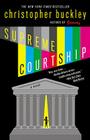
What's the book tie today?  Christopher Buckley's Supreme Courtship is out of stock indefinitely at the publisher, but we hope it'll be back soon.  The premise is actually the opposite of what is happening now, what might have happened during President Obama's time.  The POTUS is having difficulty getting a Supreme Court nominee through the Senate confirmation process and in frustration, nominates a popular TV judge.  Thankfully, she does have a law degree and is a bona fide judge.


26 January 2017

Oh, What a Day! 26January

Remember how we have talked about BBC's World Service which comes on at midnight on NPR's WNIJ, and everything is so suspiciously USA-centric?  Well, 26January is Australia Day (or for aborigines, "Invasion Day") and it seemed last night on the other side of the International Date Line that Australia was getting full press.

There was an in-depth report on campaigns on cigarette smoking and what works/does not work.  Australia is the first and thus far, only country banning any graphics or promotional printing on the package (plain white wrapper, please!) and one pack now costs AUD$28.  Since we're not talking third-world chump change here, this translates to about USD$30.

Then, there was the Witness program which interviewed a man who had joined the "Aboriginal Tent Embassy" on the lawn in front of Parliament House in 1972, after the Australian government basically took away or denied aborigines of basic citizenship.  Since aborigines were declared aliens in the country, then, four activists decided that as aliens, they should create an embassy, just like other aliens.  It turned out that at that time, there were no restrictions against pitching a tent on the Parliament House lawn unless there were more than 11 of them.  More people joined them and white Australians also lent support.  Then, in July, a law was passed making it illegal to camp out on the Parliament House lawn and overnight, police ruthlessly cleared them out.  Even while they were young at the time, less than 21 years old, only one of the original four activists survives today, highlighting the still abysmal health care conditions which aborigines face, resulting in a life expectancy of only half of that of white Australians.

And, even in sports headlines, the BBC World Service was delighted to tell us that Serena and Venus Williams are excited to face each other in the Australia Tennis Open Women's Finals, after handily defeating a Czech and a fellow American named Coco.

See how much about Australia one can learn lying awake listening to the radio?

On another note, 26January is also the birthday of Bessie Coleman.  There is a Bessie Coleman Drive at O'Hare Airport, and Larry has always accused Carolyn of not being curious enough.  Larry not only did not know who Bessie Coleman was, but he did not even ever notice Bessie Coleman Drive. Google Doodle for the day led to learning that Bessie Coleman was the first American woman aviator of African-American and of Native American (Cherokee!) descent.  Reading about her makes one think most of us are just cruising through life and not contributing enough.  She worked two jobs to make enough money to go to flight school.  As no American flight schools accepted blacks or women, she first learned French and then, went to Paris to learn to fly.  She later opened up a beauty salon to earn money for her own plane.  She hoped to open a flight school for young black aspiring aviators.  Her death is a waste, though, if we don't learn two lessons from it:  A good pilot always checks out his plane first before okaying it for take-off.  And, always wear your seatbelt (or something to keep you protected from falling 2000 ft out of a Curtiss JN-4 (of the Inverted Jenny stamp fame).

That, of course, reminds me of the first book that I read which included the Inverted Jenny stamp, Lawrence Sander's first Archy McNally title, McNally's Secret, now sadly out of print.

25 July 2016

Books and Coffee -- Doesn't That Sound Like a Winning Combination?

Heard a great feature on NPR by The Kitchen Sisters about the vitalness of COFFEE.

And do you know why there are so many letters and diaries from which to draw these coffee experiences during the Civil War/War Between the States?  This period -- early- to mid-19th century --  was witness to one of the most literate societies in history.  All these young men had read Walter Scott's Ivanhoe, James Fenimore Cooper's Last of the Mohicans and Nathaniel Hawthorne's Young Goodman Brown, Herman Melville's Moby Dick, Charles Dickens's David Copperfield and Alexander Dumas's The Three Musketeers.

Coffee and books go together like peanut butter and jelly, except while we see the continued strength and popularity of drinking coffee (except in Afghanistan right now), like peanut butter, reading books is becoming a bit of an untouchable, even deadly. Yes, in some places, you can get shot for having a certain book.  But, at the moment, USofA is not one of them, despite the Patriot Act and its progeny, the USA Freedom Act.  Read on!

26 May 2016

May's Challenge, June's WNIJ Summer Reading

Meet your May Reading Challenge from Books on First while getting a jump on WNIJ's Dan Klefstad's June Book Discussions. One of the books chosen by Dan fit right in to the May Challenge of reading a book of poetry or a book of short stories: Amy Newman's On This Day in Poetry History:


23 March 2016

What "Independent" Means

The Independent, a major British daily morning newspaper, announced that it will stop printing a paper copy and have only online editions.  What this means for fish & chip mongers (who probably don't wrap the fried foods in newsprint anymore due to Health Department complaints), I don't know.  What it means for readers who like to sit with a cuppa and the actual Independent newspaper, though, is that there will be one less civilized ritual in the world.

NPR very interestingly marked this event by interviewing Helen Fielding, the author of the Bridget Jones diary series, among other titles.  "Beloved" Bridget Jones of paper and screen got her start in The Independent.  Everyone and his mother was writing about their ordinary lives in a column in the newspapers in the 1990s, and Fielding, working at this paper -- which the NPR Morning Edition announcer kept wanting to be categorized as "left-leaning," because after all, it's called The Independent -- as a junior reporter, too was asked to write about her life as a 30-something "Singleton."  Too shy to reveal her own life, she was able to introduce Bridget Jones to the world as representative of that not-so-rare-but-special breed of female.

While lots of similar columns for hapless singles of all ages, honeymooners, mothers of young children, widows, et al followed this success, could this have been started at any other newspaper besides The Independent?  Hard to say, easy to claim that no, only a "left-leaning" independent newspaper would have the cojones or the lack of pretensions to give the go-ahead.  Nowadays, of course, in this age of blogging, facebook updates and real-time tweets, the younger generations probably could not imagine why it even had to be fictionalized. Why not let it all hang out?

Would Bridget Jones's Diary have come into being and been so wildly popular without the column?  That too is difficult to say, but either way, they did get published as books. 


12 November 2015

Agreed: The Ulysses Contract Is About the Future

Granted, the first time I had ever heard of the "Ulysses Contract" was today on NPR's Morning Edition with regards to presidential candidates persuading potential supporters to commit to go out and vote by signing a postcard (not to mention to vote for that person whose postcard they just signed).  What I heard caused me almost to run off the road as I was driving to Rochelle from Chicago this morning.  I heard the reporter labeling (or repeating Shankar Vedantam as describing) the social phenomenon of people actually committing and honoring that commitment as "what's known as a Ulysses contract.
Just like Ulysses bound himself to the mast of his ship when sailing near the Sirens in the "Odyssey," supporters are binding their future selves to vote and caucus for their candidates."

I thought, I must have heard this wrong.  As far as I've ever read and known about him, Ulysses was a selfish, vainglorious adventurer who would not make a commitment to his mast (I take it, this meant commitment to his ship and his men) anymore than he'd make a literal commitment to the mast (as the NPR reporter implied).  After reading the all-reliable Wikipedia entry on Ulysses Pact, I better understood how the Ulysses Pact or Contract got its name, but I still do not see its relevance in the context of signing a postcard today, committing to vote in a primary in the near future. I understand its use for psychiatric advance directives as well as other health advance directives, like Do-Not-Resuscitate directions.  Are these advance directives binding, or just a really good idea if you want your wishes respected after you are no longer able to express those wishes?

Ulysses wanted to hear the Sirens' song.  He persuaded his crew to have wax poured into their ears, tie him to the mast, row past the rocks where the Sirens were hanging out so that he can hear their song while not being able to crash their vessel into the rocks as the Sirens intend and afterwards, untie him from the mast. In American contract law, it's not really a true and binding contract if both sides do not get something from the agreement.  What the men gained from all this, one can't say, unless it's the absence of punishment or the retention of one's life and livelihood.  That (retention of livelihood) is what is so often used when an employer needs to persuade an employee to sign something that should have been presented for signature before the employee started working.  As we are not anticipating mass insanity on the part of Iowa voters, I really think this was a major stretch.  And, I'm a big fan of Shankar Vedantam.  There must be a different label for this kind of follow-through if a person makes a somewhat public commitment, especially if it is non-binding.


30 September 2015

It's Good When an Author Knows What He Writes Is Fiction

Heard a great interview with author Andy Weir about his book The Martian.
 
There really is so little modern science fiction being produced now.  Most of what we have in the Science Fiction/Alternative Reality/Fantasy section is paranormal (vampires, werewolves, demons, faery, goddesses, oh my!) or steampunk or alternative reality/post-apocalypse or some combination thereof.  While some can say that The Martian, too, is alternative reality (if we are using today's science), this has the two main ingredients --  science and fiction.

I love how the author talks about the incorrect scientific premises, because he knows!  So many of today's writers do not do the necessary research to write a proper story (probably why we have so much paranormal), which is plausible, believable and enlightening as well as entertaining.  Personally, I cannot enjoy any story with errors (which I know of but somehow seem unknown to the author and editor) in it and I get a little uncomfortable about errors I don't know about, especially easily verifiable facts like whether two named streets really cross in a real-life contemporaneous city or do ice cubes float or sink in a glass of iced tea or how to say, "shut up" in Korean or whether a certain brand motorbike with a certain horsepower and number of cylinders was actually made in 1979, or that very few if any cats really walk figure-8s around a human's ankles.  Knowing that the author knew about errors which he used anyway is somehow reassuring, because it is known fiction, not clueless, follow-the-leader fiction.


22 September 2015

Banned Books Week - 27Sep - 3Oct 2015

Why exactly have a Banned Books Week?  Why have any highlighted/commemorated week/day/moment?  The answer is that these highlighted times are meant to remind us of especially good and bad times, to remember. 
We need to remember why something was a struggle, how something was overcome, and that some fights are never over.

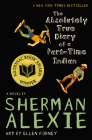
As Paula Garrett has said in her Perspectives piece today on WNIJ, while we affirm again and again the rights and responsibilities of our free and democratic society -- The United States of America, we still must stay vigilant.  Sherman Alexie's The Absolutely True Diary of a Part-Time Indian was first published in 2007, more than 230 years since the Declaration of Independence, 216 years since the Bill of Rights of Constitution of the United States were ratified, which included the First Amendment right to free speech, etc, and 64 years since the cited Supreme Court decision.  As one can see, the freedom to write and to read continues to be threatened.  Censorship, whether self-inflicted or imposed by others, will continue to be controversial.  We must be forever vigilant if we want to continue a free and democratic United States, with both rights and responsibilities accorded to its citizens.  Almost directly following this airing was a snippet of news from Thailand.  Because of the strict or broad-use of a vague law that prohibits any insults to the Thai monarchy, the local printer of the New York Times Asian edition refused to print the newspaper with the article reporting the king's hospitalization and speculating on what might happen should he die.  Self-censorship for self-preservation in 2015 reminds us again of the courageousness and unity in purpose of our ancestors in defining freedom and rights and then, fighting for them.  We can do no less to remember them each year with commemorations like Banned Books Week.

Speaking of freedom, WNIJ recently aired a different perspective on the founding freedoms as presented by Joe Flynn: the right to one's own opinion.  As I had learned and as Paula Garrett mentioned, with rights come responsibilities.  This is the basis of Joe Flynn's piece.  How do we maintain an opinion in the face of so much evidence to the contrary?  Do we stubbornly maintain our opinion simply because we have a right to have one?  With that right to maintain one's own opinion and the right not to listen to others' opinions, there are responsibilities:
  • the responsibility not to impose one's opinion on others; 
  • the responsibility not to cause harm to others or infringe on others' rights in the process of exercising one's own rights, and 
  • the responsibility (as well as the right) to change that opinion when one is exposed to additional information and experience
Reading helps us keep that last responsibility and right. (Travel, interaction with diverse groups of people and participating in activities like attending concerts and live plays also contribute to the ability to change one's opinion, but that is a topic for a different blog about reading!)  When we stop or do not start reading about different places, different times and people of different backgrounds of our own, we exercise self-censorship of a different nature.  It is not preservation of self, but preservation of an image of self -- pride going before the fall.  That is when we do ourselves as well as our nation a great disservice.  Again, we can do no less than heed the call of Banned Books Week every week. 

21 August 2015

Ah Hear Ya, Yeah, Yeah, Yeah

With apologies to The Beatles, I have noticed a trend lately among (I am presuming to be) fairly educated and sophisticated people on the radio -- reporters, announcers, anchors, learned experts, and persons in the know.
9780735342491
Interviewers, especially with a limited amount of time to present a point or a factoid, tend to ask questions which lead to an affirmative answer or agreement. When asked such a question by the anchor, reporters (even those with British accents which we American Anglosnobs tend to associate with the "fairly educated and sophisticated people" --  note of irony of quoting self!) say, "Yeah."  "Yeah, and ... "  "Yeah, that's right."  And, when I hear that, I hear The Beatles singing, "Yeah, yeah, yeah. ... With a love like that, .. you know it can't be bad."  I know, it's total lyric-mangling, but that's what my mind hears right after the reporter, the anchor or the person-in-the-know says, "Yeah."
Why? Why say, "Yeah?"  Does "yes" make the reporter sound too stuffy?  Too educated and sophisticated?  Will "yes" go the way of "whom," obsolete and too cool for words?  Where's the Society for Creative Anachronism when you need it?


01 August 2015

To Kill a Low Cholesterol Diet

Since I began again attempting to control my cholesterol and liver enzyme levels through diet and no alcohol (and exercise, of course, once Nichole Miller returns to teaching NIA after giving birth to River), the world has conspired to defeat me. Latest is NPR's Meredith Bethune seeking Scout Finch's neighbor Maudie Atkinson's specialty Lane cake.Scout, Maudie Atkinson and Lane cake are all in Harper Lee's To Kill a Mockingbird.  This comes about as its sequel Go Set a Watchman is published to much fanfare.  The New York Times offered a preview of the first chapter.  Interest in the original book (and movie with the wonderful Gregory Peck playing the wonderfully named Atticus Finch) has also been revived. So, we get to hear about the recipe of an unofficial Alabama state cake which most life-long residents no longer know about.  I thought I'd make it, except for... 8 eggs! 1 cup butter! 1 cup whole milk! 1/2 cup + 1 tablespoon bourbon whiskey!  Not for the cholesterol-conscious.